Young people don’t want to work? Denver Chamber CEO calls it a myth
J.J. Ament says employers want younger workers, but they also want colleges to teach some surprisingly basic workplace skills.

The stereotype is familiar: Young people don’t want to work, don’t want to come into the office and don’t want to commit to a career.
J.J. Ament says the employers he talks to do not see it that way.
“I think it’s somehow some myth in the community,” said Ament, president and CEO of the Denver Metro Chamber of Commerce.
He said Chamber members are eager to hire younger workers and see value in the new ideas and innovation they can bring.
But when I asked what employers want colleges to teach more of, Ament’s answer quickly moved beyond technical skills.
“Have you learned how to answer a phone?” he asked. “Have you learned how to respond appropriately in an email?”
He also listed interacting with customers, working with colleagues and fitting into a workplace culture.
Those may sound like things students should have learned long before college. Ament said they are skills, not traits people are simply born with, and that they can be taught.
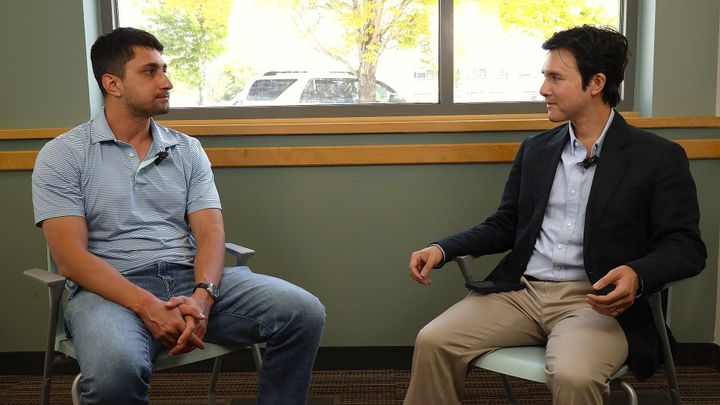
His comments came during a FoxTalk interview focused on students and young workers entering Colorado’s economy.
Ament said the employers he works with are trying to hire, train and keep younger employees. He pointed to skilled trades and construction as areas where employers are struggling to find workers with the right skills. He also named hospitality and tourism jobs, including kitchens, banquets and hotel services.
But Ament did not describe the solution as simply sending more students through four-year colleges.
He said companies are increasingly interested in what applicants can do rather than whether every applicant has a bachelor’s degree.
“If you can deliver skills, if you can deliver innovation, if you’re a hard worker, if you’re committed to learning, the companies can teach you the specific skills you need in the role that you’re being hired into,” he said.
Ament did not name specific occupations where employers should eliminate bachelor’s degree requirements. But his answer puts the emphasis on a question students hear constantly: What will actually get me hired?
For Ament, part of the answer is the ability to keep learning.
“The days of being able to learn one skill and do that skill for your whole life, those days are largely over,” he said.
The Chamber pays its interns. Ament does not want one rule for everyone.
The interview also produced a sharper disagreement over internships.
Asked whether every internship offered by a Chamber member should be paid, Ament pointed first to his own organization.
“The Chamber offers internships, and we pay those interns,” he said. “They’re contributors to the work that we’re doing here. So we reward that value and compensate that value for pay.”
But Ament stopped short of saying every employer should do the same.
He said an unpaid internship can still be worthwhile if a student decides the experience, skills or credentials are valuable enough. He argued that a blanket requirement could cause some opportunities to disappear.
“There may be certain circumstances where an unpaid internship is still worth it for the student and perhaps worth it for the company,” he said.
I then asked whether he would support the Chamber setting a public goal for paid internships.
“No,” Ament said.
He framed the issue as one of mandates and incentives, saying businesses should not all be required to behave the same way. The question asked about a Chamber goal rather than a government requirement, but Ament’s answer focused largely on state rules and government intervention.
For students deciding whether an unpaid internship is worth taking, his position leaves the decision where it already sits: with the student and the employer.
Then there is the problem after you get the job
Even if employers want young workers, and even if students arrive with the skills employers want, Ament said Colorado has another problem.
Housing.
“Housing in Colorado is an enormous risk,” he said. “Our homes are just too expensive.”
Ament tied housing directly to Colorado’s ability to keep people who attend school here.
“We want to keep them here,” he said. “But if they can’t afford a place to live within a reasonable commute to their office, we’re going to lose that talent to other states that have made housing more affordable.”
Housing data show a market that has cooled somewhat, but is hardly cheap. Zillow put the typical Denver metro rent at $1,930 in July, down 0.9% from a year earlier. The Denver Metro Association of Realtors reported a $660,000 median price for a detached home in July and said first-time and entry-level buyers remained especially exposed to affordability pressure.
Housing and workforce development are both among the Denver Metro Chamber’s current policy priorities.
That creates an odd picture for students entering the workforce.
Ament says employers want them. He says businesses value skills that do not necessarily come with a four-year degree. His own organization pays interns.
Employers may even be waiting for them.
Just make sure you can answer the phone.
And, once you get the job, afford the rent.


Comments ()