From working on cars to building rockets: Jim Bridenstine says space needs technicians, not just engineers
NASA awarded an Arapahoe Community College-led Colorado program $1.3 million to build technical aerospace pathways as the federal government begins designing a new U.S. Space Academy.
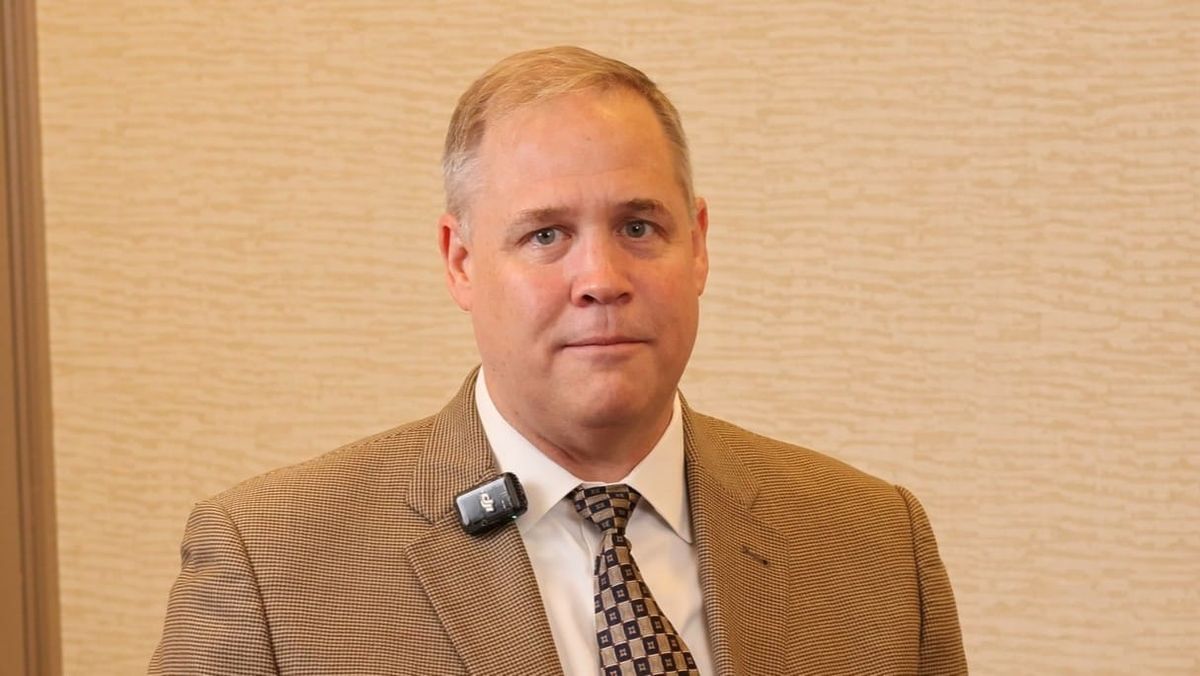
America is beginning to design a new federal academy for future space leaders. But former NASA Administrator Jim Bridenstine says some of the workers the space industry has the hard time finding may never need a four-year engineering degree.
“They just require somebody who knows how to build things, and those are not easy people to find,” Bridenstine told FoxTalk.
Some, he suggested, might start with something much more familiar than a rocket.
“They’re folks that maybe grew up working on cars,” Bridenstine said. “Can we take that type of skill set and apply it to building rockets and building satellites?”
The comments come as the federal government pursues two very different pieces of the space-workforce pipeline.
On Aug. 28, President Donald Trump established a commission to develop plans for a proposed United States Space Academy. The academy is not operating yet. The commission has 120 days to recommend details including governance, curriculum, a location and possible service requirements. The White House order describes it as a proposed NASA-led federal academy that could prepare graduates for military and civilian federal service.
Nine days earlier, NASA announced about $10.5 million in awards to seven institutions through its Aerospace Skilled Technical Workforce Hubs initiative, which is meant to expand state and regional pathways into skilled aerospace jobs.
Colorado received $1.3 million over three years for work led by the Colorado Space Institute at Arapahoe Community College. The effort is designed to connect community colleges, high school career and technical education programs, workforce agencies and industry while expanding apprenticeships, internships and employer-informed training.
NASA says Colorado aerospace employers face “persistent shortages” in skilled technical roles that do not require bachelor’s degrees but do require advanced technical proficiency.
Bridenstine, who served as NASA administrator from 2018 to 2021 and led the agency as it launched Artemis, said technical schools could provide a path into the space workforce for people who cannot afford, or simply do not want, a four-year engineering program.
He said those workers can include people who operate machines, work with hardware or support companies doing business with NASA.
The four-year degree is not the only route into every aerospace technical occupation. The U.S. Bureau of Labor Statistics says aerospace engineering and operations technologists and technicians typically need an associate degree, while some employers consider applicants with a high school diploma or certificate. The occupation had a median annual wage of $82,890 in May 2025 and is projected to grow 12% from 2025 to 2035, compared with 3% for all occupations.
And Bridenstine said the space workforce extends well beyond technical jobs.
“We need engineers. There’s no doubt about it,” he said. But, he added, “We need people that can communicate. And, by the way, we need accountants and we need economists.”
NASA’s careers material lists accountants, writers, IT specialists, project managers and public relations managers alongside scientists, engineers and other professions.
Getting the credential, however, may not be the whole problem.
Asked what graduates often know on paper but still do not understand when they reach an aerospace employer, Bridenstine said graduates may still lack a wider understanding of how the space domain works and how it is changing.
“They maybe lack the big picture of everything happening in space and how it’s changing,” he said, including differences among orbits and why the Moon matters. “I think universities could probably do a better job of training young people on the big picture of space.”
For students who have no intention of working in aerospace, Bridenstine argued that space systems already reach deeply into ordinary life.
His bluntest version was: “No GPS, no cell phones.”
He also pointed to banking, power grids, weather forecasting, agriculture and national security as areas that rely on space-based capabilities.
The proposed Space Academy is aimed at developing future leaders. The NASA workforce hubs are aimed at a different layer of the same system: students and workers entering technical aerospace careers.
Some of them, Bridenstine said, may come from technical schools. Some may have associate degrees or certificates. And some may begin with the kind of mechanical instincts they first learned working on cars.

Comments ()