Transcript: Ricky Mulvey on gambling, prediction markets and unconventional investments
Financial journalist Ricky Mulvey calls a Kalshi rent ad ‘inexcusable’ and discusses a $74 million options loss, Pokémon cards, gold and what bear markets mean for young investors.
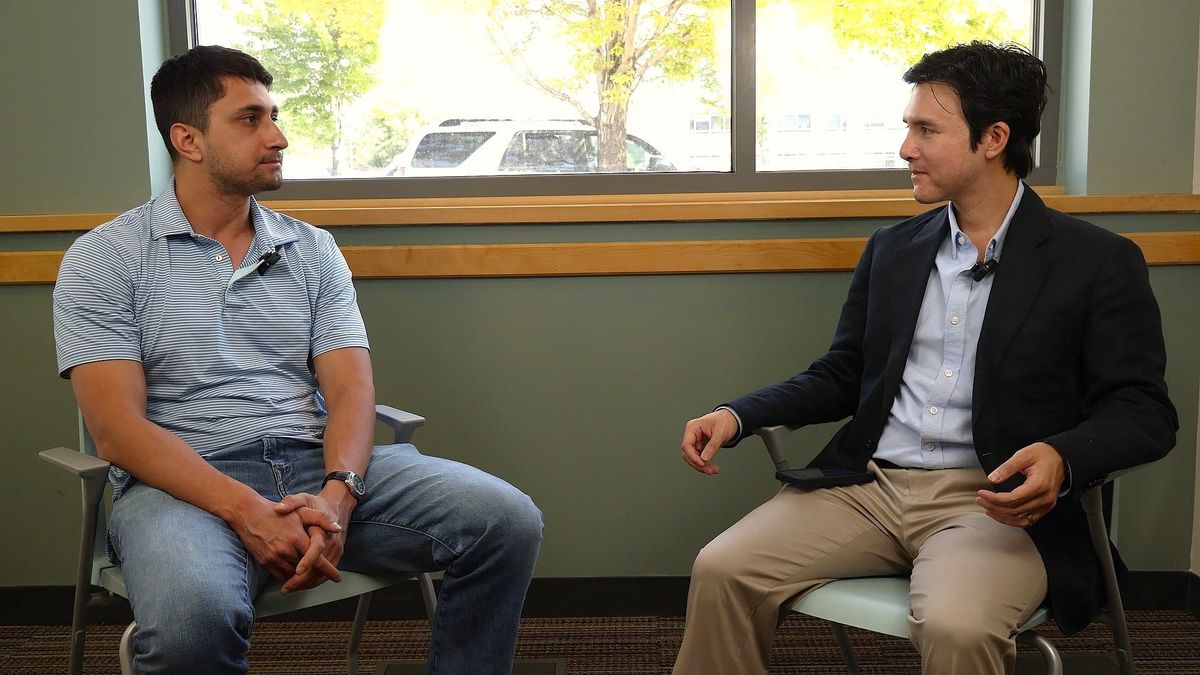
Editor’s note: This transcript follows the edited video and has been lightly edited for punctuation and readability. Questions that appeared only as on-screen cards are identified.
Opening excerpt
Ricky Mulvey: The stock market in and of itself is not a casino, but parts of the stock market are a casino.
And so I do believe that investing for the long term in businesses that are able to grow their cash flow, and if you can do that for decades and decades, that’s not quite gambling.
The $74 million options trade
Andy Green, on-screen question: What did a $74 million losing options bet reveal?
Ricky Mulvey: So first of all, you can find the trade, but you can’t identify the trader. And in the case of this specific trade, it was a while back with Taiwan Semiconductor. The person lost.
And so what I would say to that is, when you see these whale plays, sometimes it is great fundamental analysis. Sometimes it’s more than informed speculation. You’re seeing big options trades right before President Trump posts something that can move the market on Truth Social.
And indeed, now you’re seeing an entire service where Wall Street can pay for early access to Trump’s Truth Social posts.
And then the third is gambling. People gamble at all levels. You may make a $5 bet on DraftKings, but there’s money that you cannot even imagine that is playing in the stock market.
And maybe they have a hunch. Sometimes they win. Sometimes they lose.
SpaceX and retail investors
Andy Green: You reported that only about 4% of SpaceX was available to the public, but Nasdaq would treat it as if 12% were available. Who wins from that math?
Ricky Mulvey: Well, it’s pretty incredible. So, to answer that question directly, it’s those who already owned SpaceX shares before the public could get their hands on it.
And what’s been incredible about that is, as SpaceX was added to the index more recently, you would expect the stock to go up because of that artificial demand. But that hasn’t been the case.
And you’re starting to see SpaceX, at least as of today, I believe it’s hovering near, if not below, pre-IPO levels.
Andy Green: Who ends up paying more?
Ricky Mulvey: So, in this case, it should be retail investors.
And what ends up happening is that a retail investor, a regular person, is sort of forced to buy the stock when the price is supposed to be high because of this artificial demand squeeze.
Meanwhile, those who had shares before the company goes public, they end up winning.
Now, what we’re seeing with SpaceX is maybe that’s not turning out to be true in that specific case when the company entered the index. A lot of pre-IPO shareholders made out really well during the IPO. There was a ton of demand for the stock.
Nasdaq’s response
Andy Green: Nasdaq wouldn’t tell you whether its new rules help or hurt ordinary investors. After doing the reporting, what do you think the honest answer is?
Ricky Mulvey: They did publish a press release.
But, you know, sometimes I think the audience can figure out why someone doesn’t want to answer a question.
Have faith in your audience.
Prediction markets and financial vulnerability
Andy Green: You reported on a soldier accused of betting on a military operation that he was allegedly part of. When did you realize that prediction markets had become more than a weird internet game?
Ricky Mulvey: A long time ago.
But I think that when you start realizing what’s going on behind the machinery, especially with their advertising on social media, I saw one. It was over a year ago now, but it was on TikTok.
And it said, “I was unable to pay my rent, but then basically I was saved and able to pay my rent because of these amazing predictions on Kalshi.”
And that to me is inexcusable. You’re going after people who are in a financially vulnerable spot to bring them in as fish for the advanced traders on the platform.
And so I think when I saw that a little over a year ago, that’s when I was like, “Do you feel good about that?”
Do you feel good seeing an ad that says, “POV, I was unable to pay my rent, but then I was able to because, not only that, I was able to for like eight months because of these amazing predictions on Kalshi”?
Like, come on.
Pokémon cards as investments
Andy Green, on-screen question: Why are people treating Pokémon cards like investments?
Ricky Mulvey: With Pokémon cards, you’re seeing this in a lot of places where, especially with younger generations, there is a distrust, I think, of traditional investments, and people like to buy what they know.
And I mean, you know, I grew up trading Pokémon cards a little bit on the playground. I grew up watching the series a little bit. I have a warm feeling toward that franchise, as do a lot of people our age.
And what happens when, you know, Pokémon came out 30 years ago? So now the people who saw it coming up are, what would that be, like, in their 30s, in their 40s?
So now they’ve got a little bit of money. They see this as an asset class.
And then specifically on, like, the rarest of the rare, people believe that it will hold its value. And within that belief, you’re seeing that speculative explosion.
And you’re even seeing things like, you know, try buying a deck of Pokémon cards or a pack of Pokémon cards in Denver right now. It’s extraordinarily difficult to do that at face value.
So what’s going into it? It’s a mix of nostalgia. It is speculation.
And it is also, I think, in some ways, a distrust of some traditional forms of investing.
Changing his mind about gold
Andy Green, on-screen question: What investment did you change your mind about?
Ricky Mulvey: I had a pretty negative view on whether regular investors should have any allocation toward gold because it’s a precious metal. It doesn’t produce cash flow. It’s shiny. It looks cool.
I think now I personally have some of my index funds toward a gold ETF.
And I think it makes sense for a lot of people to have some allocation there, especially as you think about where the world is going from a sort of post-American-dominates-the-world era.
And what can central banks purchase that aren’t just U.S. Treasurys? I think gold can mix in.
Not to say I’m a gold bug. I don’t have all my money there, but I have a little bit of an allocation there.
Bear markets and young investors
Andy Green, on-screen question: Can a bear market actually benefit young investors?
Ricky Mulvey: You want to buy that stock cheap, right?
And so when you see stocks as a good, you want to buy it at a lower price than a higher price.
And so for a young person, a bear market can be, you know, like, I don’t want to dismiss it. It can be devastating career-wise. It can be difficult to get a job when companies restrict their spending.
It is not a good thing, full stop, when the stock market isn’t dancing.
However, if you’re able to pick up some then, if you’re able to buy into great companies, then hopefully you’re getting a discount for something you’re going to hold for a long time.

Comments ()