‘It’s going to be a whole lot easier than getting a human girlfriend’: Andrew Yang on the rise of AI dating
The former presidential candidate warned that AI companions could draw young people into “frictionless” relationships.

ASPEN, Colo. — Andrew Yang’s 13-year-old son has already considered one way to make dating easier.
“I think I’m going to get an AI girlfriend,” Yang recalled his son telling him.
Yang and his wife were surprised. They asked why.
“Because it’s going to be a whole lot easier than getting a human girlfriend,” his son said.
“And he’s not wrong,” Yang told the audience.
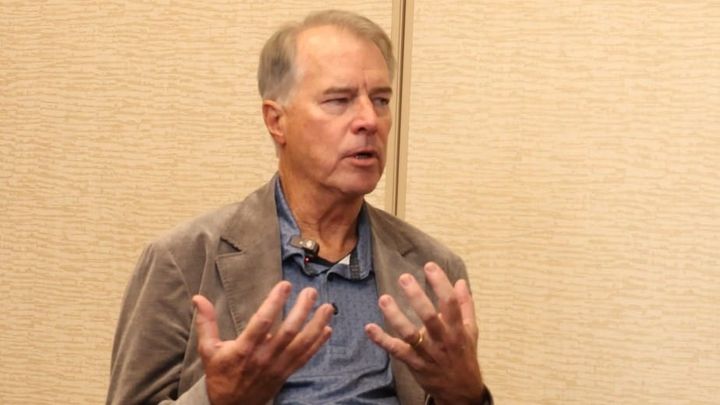
Yang, a former Democratic presidential candidate and the CEO of Noble Mobile, shared the exchange June 10 during Fortune Brainstorm Tech in Aspen.
He was appearing alongside Light Phone co-founder and CEO Kaiwei Tang for a discussion about screen addiction and technology designed to demand less of people’s attention.
Then the conversation turned to AI companionship.
“We’re introducing our kids to this frictionless environment,” Yang said.
Yang asked how many people in the audience were married, then asked how many had experienced friction in their marriages.
“All of us, right?” he said. “I mean, that’s like the stuff of life.”
Teenagers are already experimenting with AI companionship, though most are not using the technology for romance.
A 2025 Common Sense Media survey of 1,060 U.S. teens found that 72% had used an AI companion at least once. About one-third had used one for social interaction, a category that included friendship, emotional support, role-playing, conversation practice and romantic exchanges.
The same survey found that 80% of teens still valued real friendships more than AI conversations.
A peer-reviewed study published in the Journal of Consumer Research found that AI companions could temporarily reduce feelings of loneliness. The effect was strongest when users felt the chatbot was listening to them.
The researchers did not conclude that AI can replace a lasting human relationship. Their findings showed why someone who feels ignored, lonely or nervous about talking to another person might keep returning to a chatbot.
Colorado lawmakers have also started paying attention.
Colorado enacted House Bill 1263 on May 29, less than two weeks before Yang’s remarks in Aspen.
Beginning Jan. 1, 2027, companies offering conversational AI services will have to use accepted methods to estimate a user’s age and tell users when they are interacting with AI.
When companies know a user is a minor, they will be prohibited from offering points or rewards meant to keep the child engaged. They will also have to take technically feasible steps to prevent explicit sexual content and statements that encourage emotional dependence.
The law does not ban AI companions or prevent adults from using them.
Yang was also clear that he is not against AI. He said the technology could lead to advances in health care, materials science and climate research.
After the panel, FoxTalk asked Yang what advice he had for young people who felt addicted to AI or their phones.
“Start small,” Yang said.
He recommended staying away from the phone for an hour before bed, leaving it in another room while sleeping and avoiding it during the first hour after waking up.
He also suggested exercising and eating meals without a phone nearby.
“Before you know it, you’ll find some people around you who actually are down with these new boundaries,” Yang said.


Comments ()