This student film club is pushing back against mainstream taste
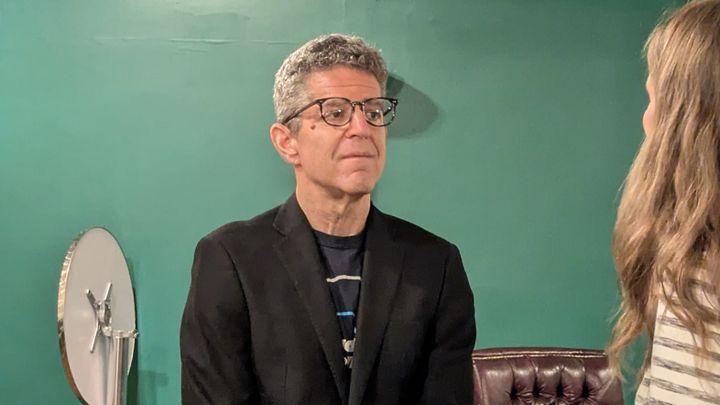
Jarod McChesney is building Films in Focus around overlooked movies with real craft, history and personality — and asking other students to look beyond what is already popular.

At a school built around filmmaking, one of the clearest arguments about movies right now is not about what is new.
It is about what students keep ignoring.
Films in Focus, a student club at CCA, is screening Darby O’Gill and the Little People, a 1959 Disney fantasy that most students have probably never heard of. That is the point. For club founder Jarod McChesney, the movie is less a random old pick than a rejection of the kind of film culture he thinks students fall into too easily.
“So many people are focused on the mainstream,” McChesney said. “What everybody knows, what everybody already has established.”
For him, that comes at a cost.
“Then we miss out on some of these films that are just less known that people have never seen,” he said.
Not just nostalgia
That frustration runs deeper than simple nostalgia. McChesney is not arguing that old automatically means better. He is arguing that film students lose something when they stay too close to what is current, widely approved, and heavy on digital spectacle.
“The movies that are coming out now feel too reliant on this new technology,” he said. “We forgot what actually makes a good movie.”
That is a strong claim, especially at a campus where students are training in a field shaped by streaming, franchise logic, and increasingly digital production. But it is also what makes the club interesting. Films in Focus is not just offering students a place to watch a movie. It is trying to build a taste for movies that feel off the beaten path, historically important, or craft-driven in ways that newer films sometimes smooth over.
Why this movie
In the case of Darby O’Gill, McChesney said part of the appeal is its film history. He sees the movie as more important than its title suggests, both for its practical effects and for the way it connects to later fantasy filmmaking.
He said movies like this matter because students would not know what came before unless someone made the effort to show them. He also said older films can push students to think differently about how movies are actually made, especially when so much current filmmaking leans on technology that can flatten the sense of craft.
For McChesney, the goal is not just education. It is inspiration.
“I want people to get inspired,” he said. “I want there to be a piece of this movie that people can look back on, and it inspires them to create more, to make their own thing, to put their own spin on it.”
More than a watch party
That pitch seems to be landing, at least for some students.
One student who attended the club, Bobby Zurawski, said the appeal is partly exposure to movies they would not find on his own.
“Most people just see the same movies over and over again,” Zurawski said.
He said he keeps coming back in part because the films are unfamiliar and because McChesney adds context that makes the screenings feel like more than casual watch parties.
“His lectures are really good,” Zurawski said, referring to McChesney’s introductions and post-film discussion. “All the stuff behind the scenes that goes wrong, and all the stuff they have to overcome to make the product.”
That may be one of the club’s strongest arguments for itself. Newer movies are easy to find. Students can stream them alone whenever they want. A screening of an older, stranger movie becomes more worthwhile when it comes with explanation, community, and the feeling that someone is curating a point of view instead of just putting on content.
Faculty Matthew Baxter, who attended the meeting, made that point bluntly when asked why not just watch something newer.
“I can do that at home,” Baxter said.
For him, older films offer something current releases do not always provide: a way to trace where filmmaking has come from, and a reason to gather around something that might not instantly market itself.
“There’s something about watching older films,” Baxter said, adding that the community around a screening can make it feel more special.
Small room, bigger goal
That community, at least for now, is still small.
Zurawski said that at some meetings it has basically just been him and McChesney. That detail could make the club sound minor, but it may actually make the story more honest. Films in Focus is not pretending to be a thriving campus scene yet. It is trying to become one.
McChesney said he wants the club to grow beyond the Lowry crowd and eventually pull in students from CentreTech too. His vision is bigger than a niche room of film obsessives talking to each other. He wants movies to become a way for different kinds of students to meet, think, and learn from each other.
Looking past the obvious
That ambition may be why the anti-mainstream angle matters. The club is not just saying students should appreciate old movies out of duty. It is saying mainstream taste can become passive, repetitive, and too easy. Watching something unfamiliar can force students to see film as a set of choices again, not just a stream of content they already know how to consume.
Zurawski put it more simply.
“I think people should force themselves to watch older movies,” he said.
That is not a slogan most clubs would build around. But at CCA, it may be exactly what makes Films in Focus worth paying attention to.
Not because it is big.
Because it is trying to make students look past what is easiest, most obvious, and already agreed on.
Correction: An earlier version of this article incorrectly described Matthew Baxter as the club adviser. He is not the club adviser.


Comments ()