Kirkmeyer says campaign ‘went low’ on $6 billion road estimate. Her plan lists $7 billion to $9 billion in funding sources
The Republican candidate’s proposal does not explain how its headline total relates to the listed funding categories. CDOT records also show why money carried between budget years is not necessarily idle cash.
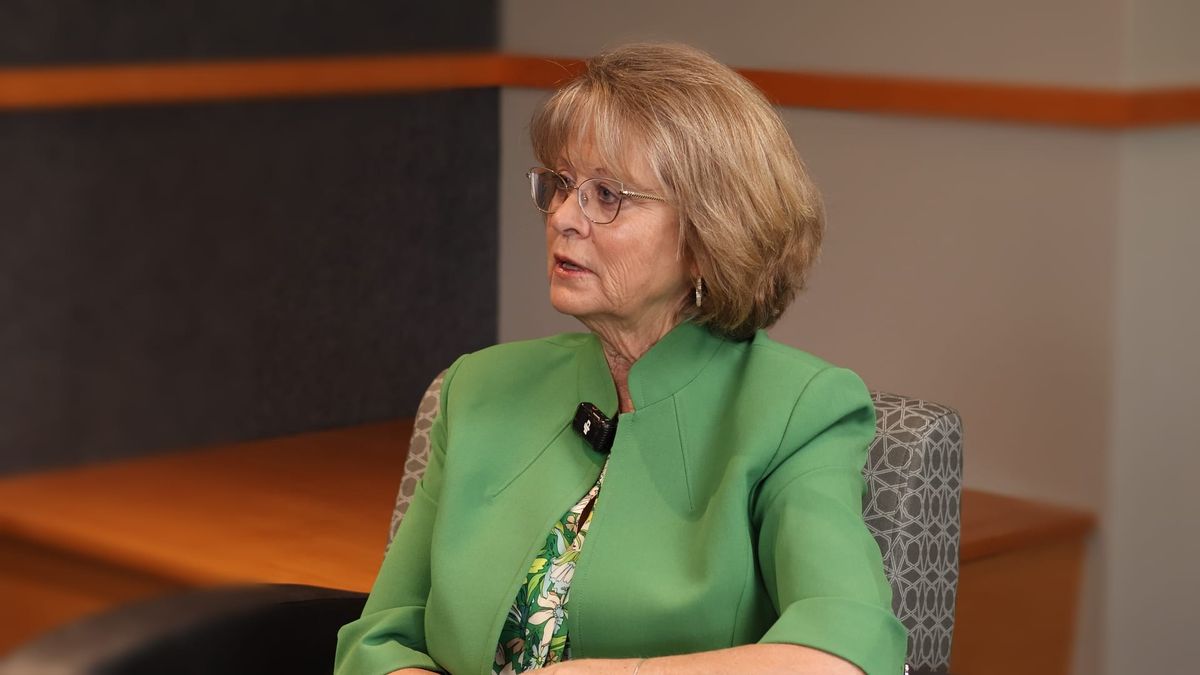
Barb Kirkmeyer’s campaign calls its transportation proposal a $6 billion plan, but the document separately lists funding sources totaling between $7 billion and $9 billion.
Kirkmeyer, a Republican candidate for governor, told me that the campaign may have set its estimate too low.
“We know that there’s about $6 billion, and we actually kind of went low on that,” Kirkmeyer said.
Her seven-page DRIVE Colorado plan says a Kirkmeyer administration would raise $6 billion during its first four years.
The funding section lists $2.5 billion from sweeping unspent project and agency cash, $3.5 billion from directing transportation revenue toward surface transportation and $1 billion to $3 billion through public-private partnerships and federal financing.
The plan does not state whether the $1 billion to $3 billion in financing is included in the $6 billion total or would be added to it.
Its draft spending priorities also exceed $6 billion.
The document proposes $2 billion for maintenance and safety, $2 billion for projects selected through regional transportation planning and between $2.8 billion and $5.6 billion for major statewide corridors.
Those figures total between $6.8 billion and $9.6 billion.
The corridor list includes bus rapid transit and managed-lane projects on Interstate 25, improvements along the Interstate 70 mountain corridor and projects in Weld, Pueblo, Mesa and El Paso counties.
Another section says Kirkmeyer would direct $800 million per year in transportation-related taxes and fees toward roadways. Four years at that rate would total $3.2 billion.
The funding summary lists $3.5 billion from that category.
The plan also proposes reducing administrative staffing growth and sweeping funding tied to vacant positions, but it does not assign a dollar amount to those savings.
Kirkmeyer points to unspent balances
I asked Kirkmeyer how much of the proposal would come from existing balances, redirected spending and public, private or federal financing.
“Basically all of it would,” she said.
Kirkmeyer gave an example of a project segment budgeted at $1 billion that might ultimately cost $800 million.
“And then they park that money over in a different fund,” she said.
“Instead of parking the money in different places, we would actually bring it back to one of the pots of money.”
Kirkmeyer said she would direct those balances toward maintenance and safety. She also said public-private partnerships could support road capacity, bridges and intersections.
Her campaign plan says $1.4 billion in project money is allocated but unspent in Colorado Department of Transportation accounts.
The document does not provide a project-by-project list showing where the $1.4 billion is held or how much is tied to existing commitments.
CDOT’s final fiscal 2026-27 budget plan says most roll-forward balances are already committed to planned projects.
Transportation construction commonly stretches across several fiscal years. Money may remain unspent at the end of one budget year even though CDOT has already committed it to future work.
In a February presentation to the Colorado Transportation Commission, CDOT said most funds expected to roll forward were “programmed and committed,” although they had not yet been budgeted to projects or encumbered in contracts.
CDOT used its surface-treatment program as an example.
The program showed an estimated $100 million rolling forward. CDOT said $112.4 million in fiscal 2026-27 and fiscal 2027-28 money had already been budgeted to projects.
The department calculated the program’s net roll-forward balance at negative $12.4 million.
Kirkmeyer referred during the interview to “seven pots of money” within CDOT.
CDOT’s final budget plan does not use that description. It organizes money through numerous programs, projects, cost centers, budget pools and transportation enterprises.
Federal financing would require repayment
Kirkmeyer’s plan also counts between $1 billion and $3 billion from public-private partnerships and the federal Transportation Infrastructure Finance and Innovation Act program, known as TIFIA.
The U.S. Department of Transportation describes TIFIA as a credit program offering direct loans, loan guarantees and standby lines of credit.
It is not a grant program.
Federal TIFIA assistance can cover up to 49% of eligible project costs. Projects must have a pledged revenue source to repay the financing and secure other senior debt.
Kirkmeyer’s plan identifies bus rapid transit and managed-lane projects on Interstates 25 and 70 as candidates for TIFIA or public-private financing.
The document says some of those projects could “pay for themselves,” but it does not provide expected toll revenue or name a repayment source for each project.
The proposal also calls for directing transportation taxes, fees and enterprise funds toward roadways. It criticizes state spending on electric buses and charging stations.
It does not list how much money would be taken from each program or which projects would lose funding.
Students without cars
I asked Kirkmeyer what the road-centered plan would provide for college students who cannot afford cars.
She said road maintenance would also benefit buses and bicycle infrastructure located alongside roads.
“Bikes, buses, cars, trucks, those are modes of transportation,” Kirkmeyer said.
She did not identify a student-specific transit subsidy or reduced-fare program.
Her plan does include bus rapid transit projects, but those projects depend on financing that has not been finalized.
Kirkmeyer is running against Scott Bottoms and Victor Marx in the June 30 Republican primary.
Her plan calls for $6 billion in transportation investment during its first four years. The funding section separately lists between $7 billion and $9 billion, while the draft spending priorities total between $6.8 billion and $9.6 billion.
The campaign document does not say whether those figures overlap.
Comments ()