Young, hot and a socialist: Is Kat Abughazaleh Gen Z’s dream girl?
Reported Analysis | Palestinian American influencer on white men in journalism and political seriousness.
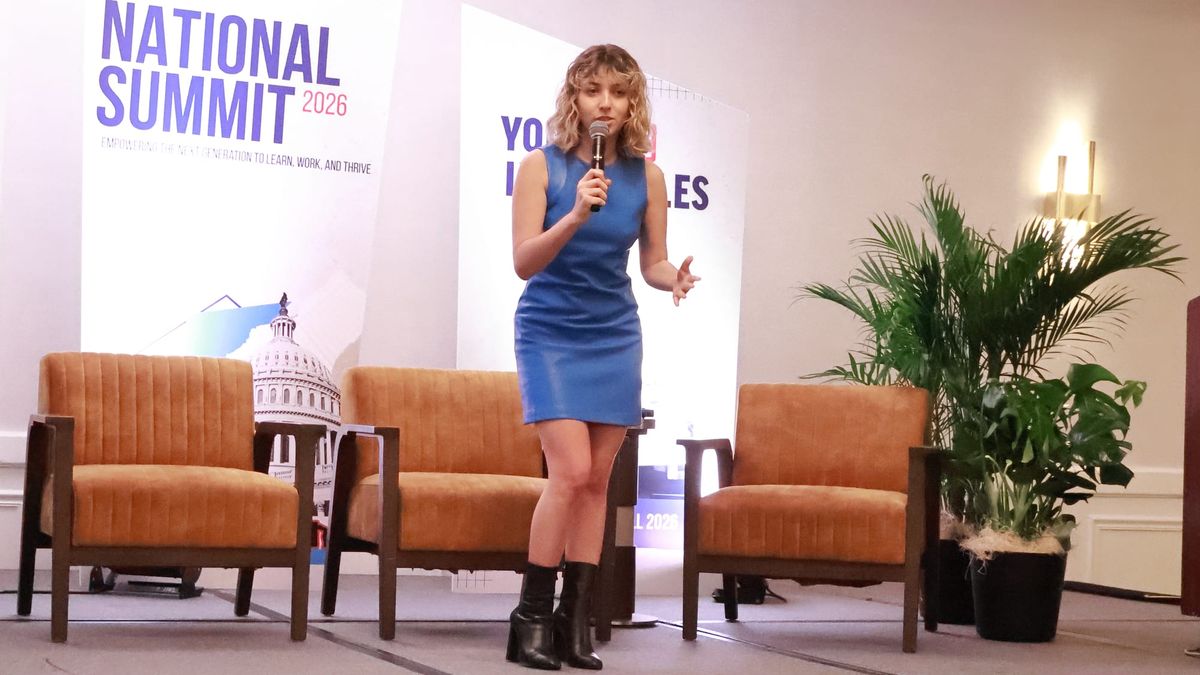
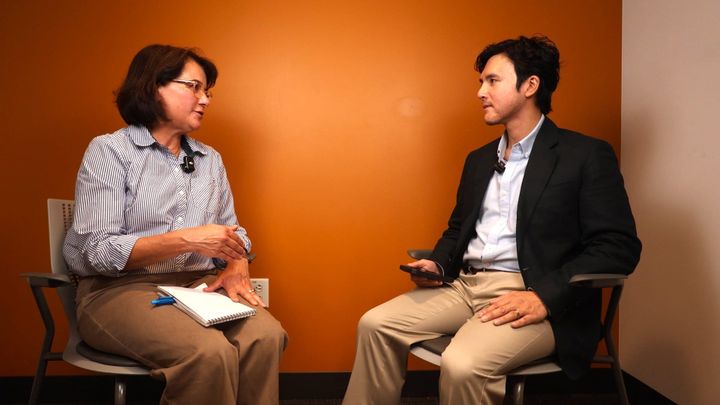
Kat Abughazaleh spoke at the Young Invincibles summit Sept. 9 about young people’s frustration with politics and the need to participate anyway. Two days later, in a conversation with a group of student media fellows, the Palestinian American researcher, journalist and content creator shifted into a more practical subject: journalism.
Abughazaleh, who ran for Congress earlier this year, talked about investigative reporting, corrections, editors, social media and the difficulty of being taken seriously as a young person in political and media spaces.
That appeal to younger audiences is measurable. As of Sept. 13, Abughazaleh had about 335,000 followers on Instagram. A 2025 Data for Progress poll found that 50% of likely Democratic primary voters ages 18 to 29 in Illinois’ 9th Congressional District viewed her favorably, compared with 35% overall. The poll found that younger and very liberal voters made up much of her base.
When a student asked what investigative journalists could do better when reporting on vulnerable communities, Abughazaleh started with something basic: where a reporter works matters.
She said talented reporters can end up at publications that are unwilling to pursue or publish certain investigations, and that an editor can substantially change a piece before publication. She also stressed that journalists should be willing to correct themselves when they get something wrong.
“Everyone gets something wrong,” Abughazaleh said.
Reporters, she said, should pay attention not only to the quality of their own work but also to the incentives and judgment of the institutions publishing it.
Abughazaleh also criticized what she described as professional incentives for some white men in journalism to benefit from coverage of fascism.
That discussion moved into how she writes for an audience.
Abughazaleh said she learned early that people are more likely to listen when a speaker sounds like an actual person rather than a script. She pointed to humor and accessible language as tools that helped her communicate more effectively.
“The point is, is talk like a normal person,” she said.
When she writes scripts, Abughazaleh said she talks through them aloud while drafting. Reading a long-form article, she said, sounds different from writing something intended to be spoken directly to a viewer.
Her advice to students interested in writing for social media was similarly simple.
“My number one recommendation for when you’re writing for social media or when you’re writing for a script in general is to say it out loud,” she said.
The conversation also turned to political seriousness — and who gets treated as though they belong in rooms where political and media decisions are made.
A student asked Abughazaleh whether she had ever struggled to take herself seriously as a Gen Z journalist. Her answer was immediate.
She said she had experienced that feeling repeatedly, including during her congressional campaign. But she also questioned the assumption that the people already occupying powerful positions necessarily know more or are better prepared.
Abughazaleh said young people are often told they are the future while living with decisions they did not make and systems they did not design. For students working at campus newspapers, she made the point more concrete: student reporters can have significant influence in their communities. She recalled a college reporter covering her congressional race who stood out because he kept pursuing stories consistently.
Comments ()