What two candidates for governor said, and what community college students should know about it.
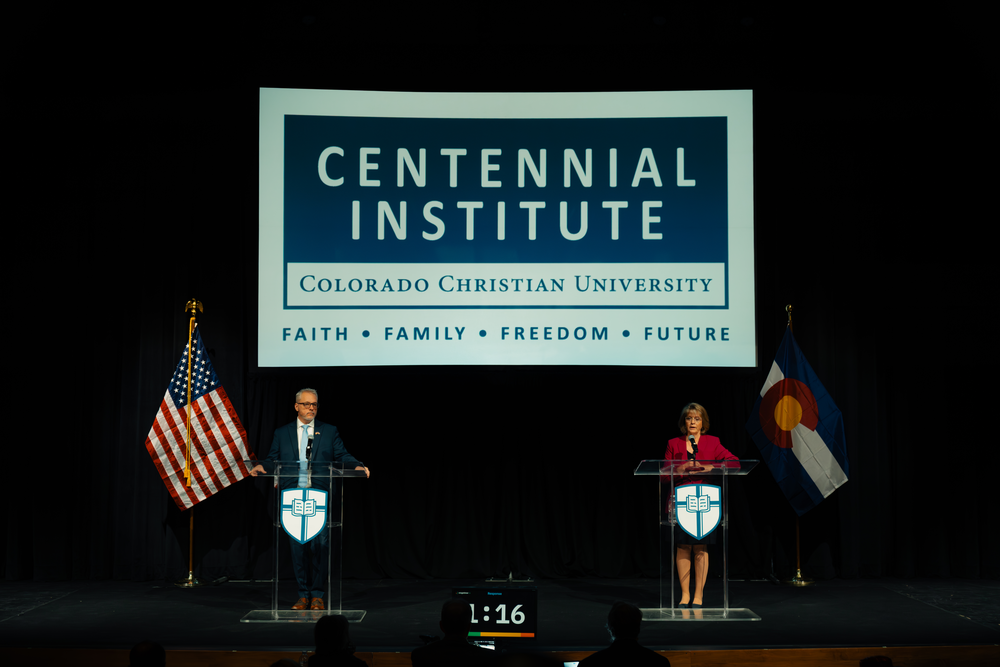
The president of Colorado Christian University opened Tuesday night with a joke about fathers. His university trains graduates to be "exceptionally employable," he said. Parents applaud that. They can see the relief, he told the crowd, "the fact that they're going to get off the family dole."
Kirkmeyer and Bottoms debated for 90 minutes after him.
State Sen. Barb Kirkmeyer and state Rep. Scott Bottoms held their second Republican gubernatorial debate at CCU's McDonald Performance Hall in Lakewood on May 26. Victor Marx, the third candidate, declined the invitation, calling the event a staged ambush after a moderator asked him to substantiate some of his past statements. The primary is June 30. The Colorado Community College System enrolls about 130,000 students a year at 13 colleges and is the state's largest higher education and workforce training provider. Many commute.
On transportation, a moderator described a recent drive to visit his mother in Oklahoma. Crossing back into Colorado, he said, he could feel the road quality change before he looked at a sign. Colorado's roads rank 42nd nationally, grade D-plus from the American Society of Civil Engineers and carry a $350 million annual shortfall just to hold their current condition. This year CDOT sent $193 million, nearly 9% of its budget, to bike lanes, transit and electric vehicle charging.
Both candidates said that spending was misplaced. Kirkmeyer said the Polis administration had moved money away from highways into "buses that nobody rides basically," though she said buses do belong in urban areas. Bottoms said for every dollar a bus rider spends, CDOT puts in $19. "That's nobody's business plan would work that way," he said. Bottoms said a CDOT employee he met in Steamboat Springs recently told him workers were hired 10 at a time for jobs one person could handle, and that 30% of every project budget goes to environmental compliance before road work starts. Kirkmeyer said she had a plan, posted at kirkmeyerforcolorado.com, to identify $6 billion over four years without raising taxes through leftover project funds, better management and public-private partnerships.
RTD serves several Front Range community college campuses.
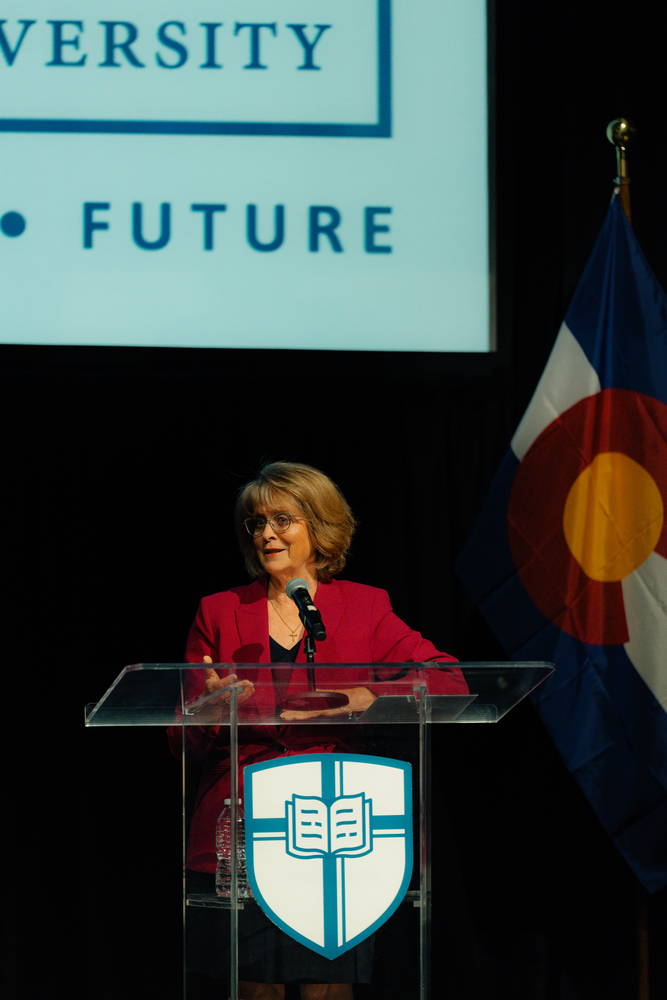
A moderator opened the housing question with numbers: 3% of Colorado's residential land allows multiunit housing, minimum lot sizes require two acres on 86% of residential land, ADUs are banned on more than a third of single-family lots. He asked both candidates how a Republican governor fixes a shortage built largely at the local level. Kirkmeyer said local residents should define their own neighborhoods, not "100 legislators or a governor with his cabinet members sitting around deciding what my neighborhood should look like." She would fix state-side permitting delays instead, including wastewater permits five years behind. "If you don't have sewer you can't build homes." Bottoms blamed the state too, differently: liability rules made builders so easy to sue that Colorado went eight years without building one condo or townhome. "Just two years ago, we started building them again." Deregulation was his answer.
Many community college students face housing costs while enrolled. The housing exchange covered liability law, wastewater permits and state versus local control.
Medicaid came up as a budget question. A moderator said spending had grown more than 100% over five years while enrollment fell. Bottoms said he would start by investigating who was on the rolls and whether they were eligible, pointing to Cover All Coloradans, budgeted at $17 million and coming in at $105 million in its first year. Kirkmeyer corrected the category: Cover All Coloradans is not Medicaid but a Medicaid-like program, already capped by legislation she sponsored this session. She said Medicaid is controlled through three levers, provider reimbursement rates, eligibility and covered services, and accounts for 33% to 34% of the general fund. Then she moved somewhere the budget question hadn't gone. "We have 25 counties in this state that have maternal health care deserts," Kirkmeyer said. "When there's a maternal healthcare desert, it doesn't matter if you're on Medicaid or not. Every woman in that county no longer has access to health care."
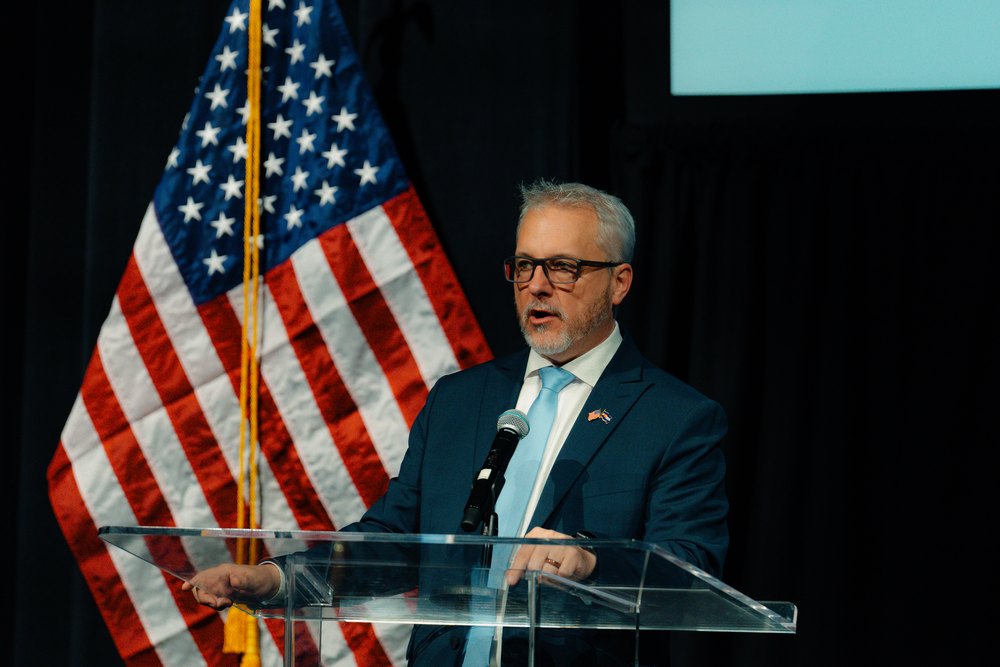
A moderator pressed Bottoms on property taxes with a number: $15 billion to local governments in 2024, nearly $15.3 billion according to a Common Sense Institute report, covering schools, fire districts and other services. How do you eliminate them without defunding those services? Bottoms said restructuring toward sales tax was doable, pointing to Florida, and argued that taxing people annually on homes they had already paid off was unconstitutional. He named four budget categories he said ran into the hundreds of millions and were currently off-limits: abortion coverage, transgender surgeries and two categories of programs for undocumented immigrants. Bottoms said cutting those areas would be part of restructuring the tax code. Kirkmeyer said she had already carried legislation bringing the commercial assessment rate from 29% to 25%, effective for the 2026 tax year. She would look for further reductions but would first consult the local entities that run on property tax revenue, including schools, fire districts, water districts, hospital districts, counties and municipalities.
On state offices, Kirkmeyer named four she would defund: the Office of Saving People Money, which she said pays the lieutenant governor a second salary without saving anyone money; the Office of New Americans; the Office of Just Transition; and a workforce program she called duplicative. She would also cut personal services and operating lines 5% to 10% across departments. Bottoms said he would investigate every state agency for waste, fraud and misuse and eliminate programs he said direct state money to people who are not Colorado citizens.
In her closing statement, Kirkmeyer said the state would be "open for business" from her first day as governor. Bottoms said Colorado was redeemable. Another debate before the June 30 primary is June 2 at the University of Denver.
Community colleges were not mentioned.


Comments ()