Scholarships, lower tuition or public-service aid? Three Colorado governor candidates make different pitches to community college students
Scott Bottoms, Barb Kirkmeyer and Phil Weiser offered different approaches to transfers, transportation, debt, jobs and higher-education funding in separate FoxTalk interviews.
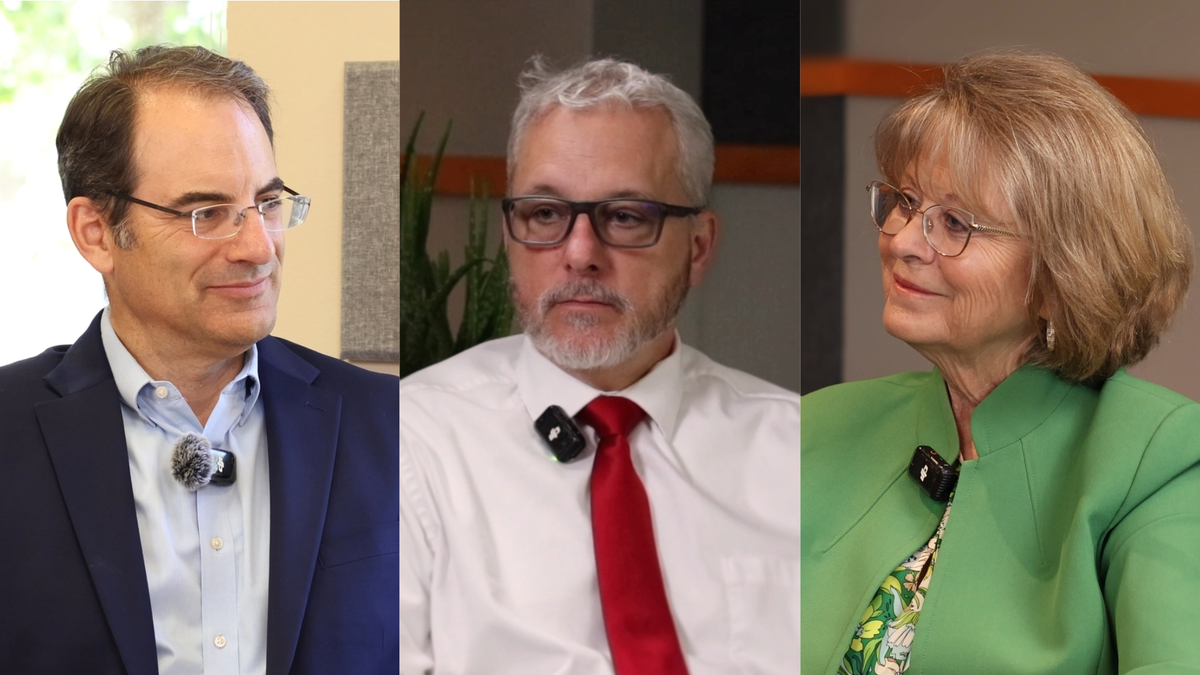
One candidate proposed automatic transfer scholarships and bus passes. Another said students should judge her by tuition increases, financial aid and state funding. A third offered public-service stipends or help paying down college debt.
In separate interviews, I asked three candidates for Colorado governor what they would do for community college students balancing classes with work, commutes, family responsibilities and the state’s rising cost of living.
Republicans Scott Bottoms and Barb Kirkmeyer and Democrat Phil Weiser gave sharply different answers.
Bottoms offered the longest list of direct student benefits, including transfer scholarships, transportation assistance, child care and targeted grants for adults returning to school.
Kirkmeyer centered her answers on protecting colleges’ base funding, limiting tuition increases and cutting administrative spending within the Colorado Department of Higher Education.
Weiser pointed to ColoradoCorps, a paid public-service program that he said could provide stipends before college or debt assistance after a participant completes school.
The comparison covers only the three candidates FoxTalk has interviewed. It is not a complete guide to the gubernatorial field. The interviews were conducted separately, and the candidates were not asked identical questions. A subject that was not addressed in one interview should not be read as opposition to that policy.
Who offered the most direct financial help?
Bottoms proposed automatic scholarships for community college students who complete two years and transfer to an in-state public college.
“If you’re in a community college, I think that you should automatically get certain scholarships to continue that education if you continue in a state college in the state of Colorado,” Bottoms said.
He argued that students who complete two years at a community college have already demonstrated that they are ready to continue.
Bottoms also proposed targeted grants for parents and adults returning to school after years away from the classroom. He said the state should help students find grants rather than push them toward additional debt.
“I think we’ve got to stay away from the loan track,” he said. “The loans are what hurts everybody long term.”
Kirkmeyer said she would consider a state grant for students who complete an associate degree and transfer to a Colorado public university, but she stopped short of making a commitment.
“I’m open to looking at that, and it has to also be something that we can afford within our budget,” she said.
She identified tuition, financial aid and state support for colleges as the three measures students should use to judge her first year.
Kirkmeyer said students should examine whether tuition increased by 5% or 6%, or whether her administration held the increase closer to 2% or 3%.
Weiser’s direct student benefit would be tied to public service.
“I’m going to launch something called ColoradoCorps,” Weiser said.
He said young Coloradans could work in teaching, nursing, counseling, law enforcement, firefighting and other fields where the state faces worker shortages.
“Either you do it before community college, and then we give you stipend support for community college, or if you do it after, we can help you with your debt,” he said.
Weiser’s campaign describes ColoradoCorps as a paid service, training and career-development program for people ages 18 to 26. The interview did not establish the size of the stipend, the amount of debt assistance or how many people could participate.
Tuition and higher-education funding
Bottoms said Colorado is not putting enough money into community colleges.
“We’re not putting enough money into the community college system,” he said.
He also singled out mandatory student fees as an early affordability target. Bottoms said some fees come from administrators rather than students and should be reviewed or removed.
Kirkmeyer said her first budget request would protect the core state funding provided to community colleges and four-year institutions.
“That’s the goal, is how do we keep tuition low,” she said.
At the same time, Kirkmeyer said the Colorado Department of Higher Education could face a 5% to 10% reduction in personnel and operating expenses.
She distinguished those cuts from direct reductions to colleges.
“It would apply to the department, the administrative part of the higher education department,” Kirkmeyer said.
She did not identify which positions or services would be reduced. The department works on financial aid, transfer policy, data and other statewide higher-education functions.
Weiser tied his larger education funding goal to changing Colorado’s Taxpayer’s Bill of Rights, known as TABOR.
Asked what students should examine at the end of his first term, Weiser called changing TABOR “the big question.”
He said Colorado needs greater investment across education, from early childhood through career training and community college.
“If I’m successful, I’ve changed TABOR, and we’re making investments from cradle to career, setting up young people for success,” Weiser said.
Changing TABOR would require more than an executive decision. Weiser’s answer placed his broader education agenda behind a difficult statewide political and legal fight.
Transportation and child care
Bottoms offered the clearest student-specific transportation proposal.
“Let’s help them get some bus passes,” he said.
He also called for more child care options, including services located on community college campuses.
Kirkmeyer did not propose a student transit subsidy or reduced-fare program.
Asked what her road-centered transportation plan would provide for students who cannot afford cars, she said road maintenance would also benefit buses and bicycle facilities located alongside roadways.
“Bikes, buses, cars, trucks, those are modes of transportation,” Kirkmeyer said.
Her plan includes bus rapid transit projects, but she emphasized the condition of the roadway system as the foundation for every mode of travel.
Transportation and child care did not receive the same attention in Weiser’s FoxTalk interview. He was not asked to offer a student bus-pass or campus child care proposal.
Jobs, training and public service
All three candidates connected community colleges to the workforce, but they described different relationships between students, employers and the state.
Bottoms called community colleges the “blue collar” side of higher education because of their focus on technical instruction, local employers and job placement.
He proposed partnerships in which businesses help shape college programs and provide scholarships or grants. Students could then commit to working for the sponsoring company for several years.
“All you have to have is a commitment afterwards that I’m going to commit to work for this company for three, four years or whatever, and they give some grants and scholarships along the way,” Bottoms said.
Kirkmeyer named health care, aerospace, engineering, oil and gas and artificial intelligence as possible areas for community college partnerships.
She declined to limit the state to a fixed list.
“If somebody’s got some great ideas, man, I’m all on board,” she said. “Let’s listen to those ideas.”
Weiser proposed earn-and-learn programs that would let students receive wages while building career skills.
“I want to set up programs where you can earn on the job while you’re learning,” he said.
He also proposed a Business Navigator to connect aspiring entrepreneurs with information, assistance and financing.
“When I’m governor, we’re going to create this Business Navigator and have the concrete goal of helping you start your own business,” Weiser said.
Housing and renters
Kirkmeyer said lower property taxes could help apartment owners hold down rent increases.
She did not propose a requirement that landlords pass those savings to renters.
“That should help that they, you know, hopefully they wouldn’t have to raise prices for rentals or at least be able to keep them steady and stabilized,” she said.
Bottoms also supports lower property taxes and less regulation as part of a broader affordability approach, but his FoxTalk interview focused more heavily on student fees, grants, transportation and child care.
Weiser focused on renter protections.
He said renters can face mandatory junk fees and rent-setting practices by large landlords.
“Renters are often finding themselves mistreated by landlords who engage in any number of shady practices,” Weiser said.
His campaign says it would seek stronger protections for renters, legal support for people facing eviction and restrictions on algorithmic price coordination.
Weiser did not propose direct rental assistance for college students in the interview.
A Republican split over four-year colleges
Bottoms sharply criticized traditional four-year institutions.
“I think a lot of our higher academies, our traditional four-year schools, I think they’re buying into some things that are not healthy, and they’re doing a little bit more indoctrination than they are educating,” he said.
He said community colleges did not face the same problem and were more focused on practical education.
Kirkmeyer disagreed when I presented Bottoms’ statement during her interview.
“I don’t know where he’s gotten that information from, and I have not ever heard that before,” she said.
Kirkmeyer said both community colleges and four-year institutions were working to prepare students for careers and self-sufficiency.
“I have not heard of where our higher education is, you know, indoctrinating students,” she said.
Weiser was not asked the same question.
What would count as success?
Bottoms said students should examine whether community college enrollment and state funding increased during his administration. He also pointed to the condition of the broader economy.
Kirkmeyer gave students three budget measures: tuition growth, financial aid and state support for colleges.
Weiser said students should judge him on whether he changed TABOR and increased investment across the education and workforce system.
The answers reflect three different approaches.
Bottoms emphasized direct assistance and greater investment in community colleges. Kirkmeyer emphasized budget management, institutional funding and measurable tuition outcomes. Weiser connected student support to public service, workforce programs and a larger effort to change how Colorado funds education.
None of the interviews produced a complete price tag.
Bottoms did not attach costs or funding sources to his transfer scholarships, bus passes or expanded child care. Kirkmeyer did not specify the cost of a transfer grant or which services would be affected by reductions at the Department of Higher Education. Weiser did not state the stipend, debt-relief amount or total cost of ColoradoCorps.
Those missing figures would determine how many students each proposal could reach and whether the benefits could survive the state budget and legislative process.
Several questions in the Weiser and Kirkmeyer interviews were submitted by The Metropolitan, MSU Denver’s student newspaper, through its question-sharing and distribution partnership with FoxTalk.
Read the interviews
Barb Kirkmeyer
https://www.readfoxtalk.com/full-interview-and-transcript-barb-kirkmeyer-on-tuition-roads-and-colorado-colleges/


Comments ()