Skip to content
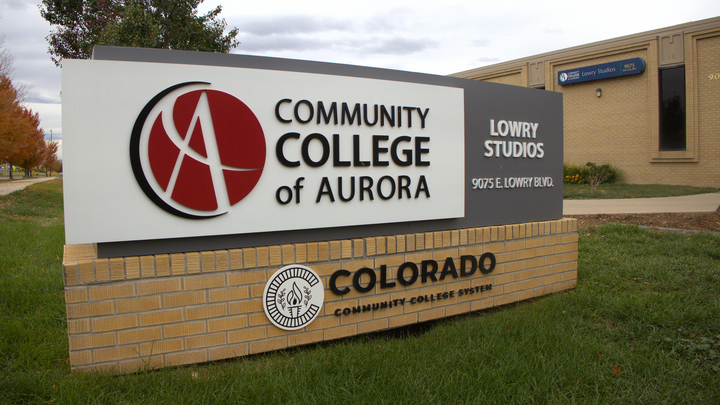
Student-led reporting for Colorado Founded at the Community College of Aurora · Independent and expanding statewide
Independent student journalism
FoxTalk

WATCH: JB Holston discusses Colorado higher ed restructuring, two-year college tuition and earnings tests
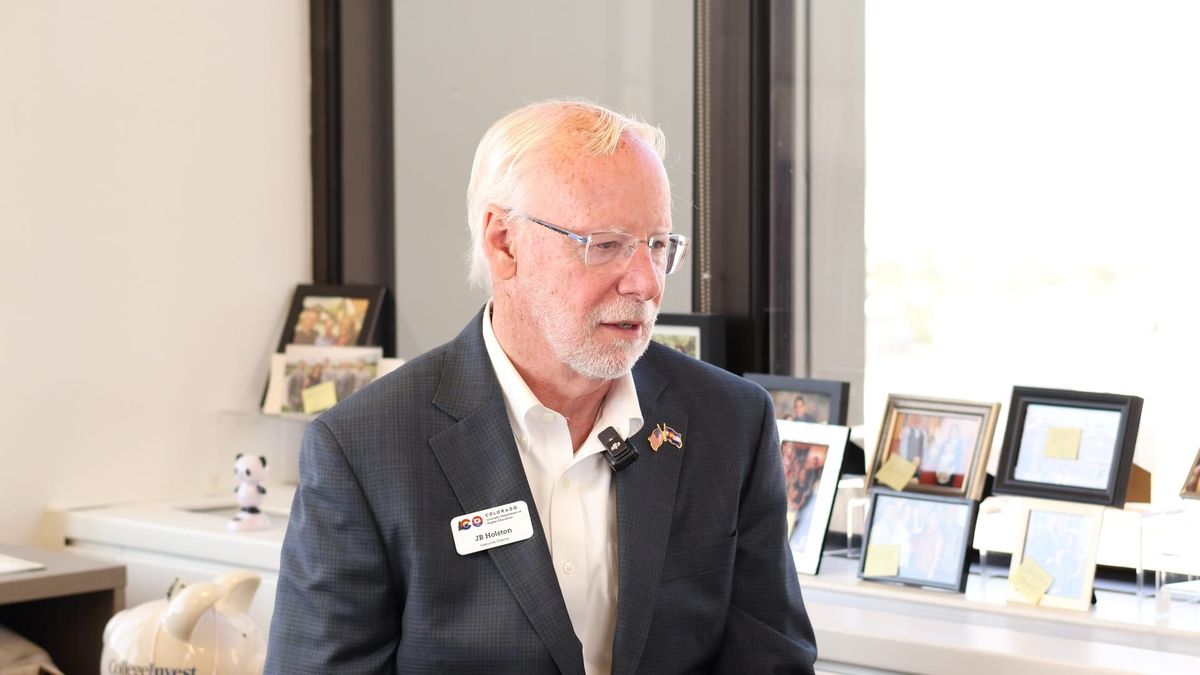
Colorado Department of Higher Education Executive Director J.B. Holston spoke with FoxTalk about the state's higher education and workforce reorganization, tuition flexibility for two-year colleges and how earnings data could affect students and academic programs.
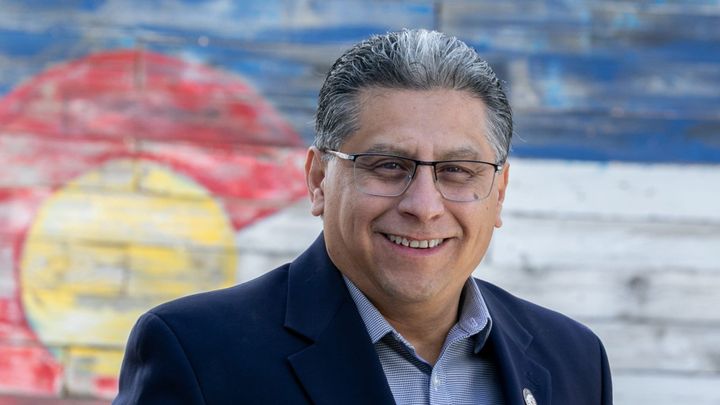
WATCH: JB Holston discusses Colorado higher ed restructuring, two-year college tuition and earnings tests
(Andy Green / FoxTalk)

FoxTalk interviewed Holston on July 24, 2026, about changes underway in Colorado higher education and what those changes could mean for students and colleges.

Watch the full interview:

The following transcript has been lightly edited for punctuation, repeated words and readability. The substance of the questions and answers has not been changed.

Q: I'm Andy Green with FoxTalk, joined by Executive Director of the Colorado Department of Higher Education J.B. Holston. Thanks for chatting with us.

Holston: Happy to be here.

Q: Since taking this job, what is one biggest problem Colorado higher education is facing that looks different from inside the department than it does from the outside?

Holston: I'd say there's both a problem but also an opportunity. I think enrollment is generally declining in the U.S. for undergraduate institutions. International enrollment is declining quite rapidly, largely due to federal policy.

I think what's different from the inside is seeing how the institutions are responding and how supported they are by their communities. Everyone's quite aware of these issues, and they're moving rapidly to be positioned to survive through all of those changes.

Q: Which programs are most likely to move in the reimagined department?

Holston: Well, the way the legislation works, the entire department is going to be renamed, and it's going to take on parts of other departments.

The other parts of departments are things that relate to workforce in the Department of Labor, things that relate to workforce in the Office of Economic Development, and some things that relate to workforce adult learning, in particular in the Department of Education. But they're all going to come into this department.

This department will get a new name, but it will continue with all the programs that it currently oversees.

Q: What new authority do you think CDHE should have when the transition is finished?

Holston: I don't know that it's a question of authority so much as responsibility. So clearly having oversight across all of the 120 or so different programs that the state is responsible for around workforce and higher education, which collectively spend almost $2 billion of taxpayer money a year.

Having responsibility across all those is good for students, it's good for Coloradans, it's good for the institutions.

It just makes the state more effective in helping people find the right pathway and helping employers find people. So I think it's more a question of responsibility than authority.

The statute that determines what authority the commission has and how we do oversight of higher ed, that may or may not have to change very much.

Q: What should remain with colleges?

Holston: Colleges are still the place where program decisions are going to be made. So what are the pathways? What should the curriculum be that supports those pathways?

They're going to be responsible for tracking a lot of information about the quality of those pathways. They'll need to report that out, as they do now, to the state so that we can do a good job for citizens making sure that we're clear on what the outcomes are, what's valuable, etc.

Q: What problem does this reorganization solve that existing agencies could not solve simply by coordinating better?

Holston: Coordinating in state government doesn't happen all that often or all that easily, partly because the agencies and departments tend to just be overwhelmed doing the work that they're doing.

And as a result, that's one of the things I found coming in. There's a lot of conversation about coordination, and little of it gets done. People are just far too busy.

So by structuring a department so that all of the work is under one roof, the coordination will happen in ways that, when you have separate departments and agencies, everyone's just too busy with what they're doing to get on with the extra task.

Q: This fall, two-year colleges can raise tuition by as much as 5%, while four-year institutions can raise it by as much as 3.5%. Why should students at the lower-cost institutions face the higher permitted increases?

Holston: Yeah, I think there were a number of reasons why the community college system wanted that flexibility.

First and foremost, they're by far and away the lowest-cost alternative for students, and that will continue to be the case.

They also wanted a little bit more flexibility because, like all institutions, they're facing a lot of financial pressure, and they have a lot of objectives to provide more programs. Some of them are expensive. If you're going to do nursing or anything that requires anything trade-related, anything engineering-related, those are very expensive kinds of programs to provide, so they wanted a little bit more flexibility.

The permission to raise rates doesn't mean that the institutions or the systems will necessarily raise those rates or that, particularly after discounts, financial aid and other kinds of discounts, the actual increase will be anything near what they're permitted to do.

If you look at higher education across the U.S. over the last 25 years, after inflation, net tuition is actually lower today than it was 25 years ago.

On average, tuition is discounted by 57% in universities around the country right now, and so after that discount rate, in fact after inflation, the tuition rates have gone down.

Q: The next couple of questions come from student journalists at CU Boulder. For a student who has never heard of the phrase “earnings premium,” what does it mean in plain English?

Holston: Can you make more money if you pursue this pathway or that degree or that program than if you pursue a different program or pathway or certificate or degree or minor or other?

So the premium just refers to whether a particular pathway gives you an opportunity to earn more money at the other end than some other pathway.

Q: When will the earnings tests begin to matter to students?

Holston: Earnings tests matter to the institutions now. There are new programs like Workforce Pell. Students are only eligible for if the institutions, if the programs publish the earnings outcome information.

That's a federal program that's just launching. More and more federal funding will require data on earnings, so the effect on students' ability to borrow, the effect on institutions' ability to get their student support from the federal and other government, is going to depend on that kind of data, and it's already happening.

It will increase pretty dramatically over the next two to three years.

You know, we talk a lot about the government's role, but it's driven by people. I just think people are a lot more focused these days on what the economic benefit of the choices they're making as students or parents or lifelong learners are going to be when they pursue a particular learning journey.

Q: What behavior are they supposed to change at colleges?

Holston: I think it depends on who you're talking about.

I don't know the colleges. I think the colleges are already being pressed to look at their portfolio programs and decide how many of them they can support, which ones they can support for the long haul, and that would be happening whether or not there were earnings premium data or information.

I think from a student perspective, one of the benefits of the reorganization is we need to do a better job getting students that data so that, if folks are interested, if they're making choices based on what the earnings outcomes might be for the pathway, it's an easy thing to find out.

Right now, it's pretty difficult. You'd have to do a lot of work to try to figure that question out, and it might not be accurate.

I think the state has an important role to make sure that the data is available, that it's accurate and that it's successful.

Q: Suppose I'm halfway through a program when it receives a failing earnings test result. What happens to me next?

Holston: Nothing. I mean, these are all going to take effect over time.

The program probably won't continue to. It may not continue to exist because the institution may decide that if students can't get funding to pursue that path, have fewer students pursuing the path, and the institution may decide that they don't want to continue to support it. So that's one possibility.

I think, ultimately, what the federal government is trying to do is discourage people from borrowing money for programs that mean that they may not be able to pay that loan back.

So ultimately, I think students will have a lot more information to decide whether the path they're pursuing is worth the debt, in this case, required.

Some folks, of course, pay for these things without taking on any debt, in which case it won't have any effect at all. So it's really just folks who are borrowing money through federal programs, like Pell, that you'll see the choices affected.

But it'll take quite some time. It's not going to happen really quickly.

I think the more immediate question is whether institutions start trimming the options available based on what they perceive the earnings possibilities may be.

So far, we're not hearing that, for the most part, from institutions. They may look at other reasons, just general popularity of programs as they're forced to make some difficult financial decisions, but it's not so much based on the requirement to report out earnings data.

Holston: So these are pictures of most of, not all of, the current staff within the department.

My predecessor had left them here when I came in. And so when I look out at the beautiful mountains behind, I first look at everyone who does all the hard work on behalf of students here in Colorado.

And that's always wonderful. It's a good reminder of why we do what we do.