Skip to content
Student-led reporting for Colorado Founded at the Community College of Aurora · Independent and expanding statewide
Independent student journalism
FoxTalk

Cornell president Michael I. Kotlikoff warns of ‘dual threats’ to universities in Colorado speech

Michael Kotlikoff accepted a free-inquiry award from Steamboat Institute while criticizing both efforts to silence speech on campus and government pressure on research and universities.
Cornell president Michael I. Kotlikoff warns of ‘dual threats’ to universities in Colorado speech
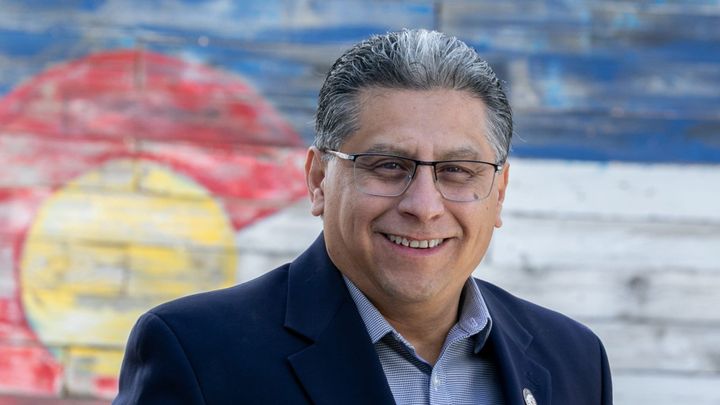
Cornell University President Michael I. Kotlikoff speaks at the Freedom Conference in Beaver Creek, Colorado, on Aug. 29, 2026. (Andy Green/FoxTalk)

BEAVER CREEK, Colo. — Cornell University President Michael I. Kotlikoff warned Saturday that American universities are being threatened from two directions: by people inside universities who try to turn them toward political goals and by government officials who use funding and legal pressure to push institutions toward their own agendas.

Kotlikoff made the argument while accepting the Bruce D. Benson Courage in Education Award at Steamboat Institute’s Freedom Conference in Beaver Creek.

“Today, this priceless American asset faces dual threats,” Kotlikoff said in remarks Cornell has since posted online.

Steamboat Institute, a Colorado nonprofit that promotes limited government, free-market capitalism, individual rights and strong national defense, gave Kotlikoff the award for what it described as his defense of open inquiry, civil debate and intellectual diversity at Cornell.

Kotlikoff used the occasion to defend those principles, but he did not give an uncomplicated defense of higher education.

He acknowledged that universities have helped create public distrust through selective admissions, opaque processes, large endowments, high tuition, ideological narrowing in some academic fields and misconduct by some students. He argued that those criticisms contain truth without capturing the full value of American universities.

Universities remain major sources of scientific discovery, professional education and innovation, Kotlikoff said, while attracting researchers and students from around the world.

He then drew a line between two forms of political pressure.

Inside universities, Kotlikoff criticized disruptive protests, attempts to silence other speakers and scholarship driven by activism rather than open inquiry. He said Cornell has tried to enforce its rules when one group’s conduct suppresses the rights of others while also broadening the range of ideas represented in scholarship.

Outside universities, he focused on government.

Kotlikoff warned about political involvement in scientific research, threats to research funding and legal pressure on universities. He also raised concern about whether American universities will remain able to attract international talent and whether the federal government will remain committed to evidence-based science policy.

The argument put Kotlikoff in a more complicated position than the award presentation alone suggested.

Steamboat Institute’s conference program praised him for standing firm against protesters and faculty critics, describing criticism of his leadership as meritless. That is the organization’s assessment, not an independent finding by FoxTalk.

Kotlikoff, meanwhile, told the audience that threats to university freedom do not come only from campus activists.

He said he intends to resist both kinds of pressure: enforcing university rules when members of the Cornell community violate them while speaking against government use of funding and legal threats to influence universities.

The speech also outlined the philosophy Kotlikoff says should govern free expression at Cornell.

Universities should not protect students from ideas merely because they find them offensive, he argued. Freedom to pursue ideas also carries responsibilities: intellectual honesty, openness to being wrong and respect for other people’s freedom to speak and learn.

Cornell’s expressive-activity policy follows a similar framework. It identifies open inquiry and freedom of expression as core university values while allowing viewpoint-neutral restrictions for conduct including threats, violence, harassment and disruption of university operations.

The university’s handling of protest and expression has itself been contested. Kotlikoff has faced criticism from students, graduate workers and faculty over Cornell’s response to campus demonstrations, including disputes over where the institution draws the line between protected expression and prohibited disruption.

That tension was largely absent from Steamboat Institute’s introduction of Kotlikoff, but it sits at the center of the argument he made after accepting its award.

Kotlikoff closed by returning to what he described as Cornell’s tradition of “freedom and responsibility”: protecting open inquiry while expecting people exercising that freedom to preserve it for others.