“Ban phones and social media”: Michael Bennet says he would pursue restrictions in Colorado schools
The U.S. senator and Democratic gubernatorial candidate said he would “work to try to ban phones and social media bell to bell,” linking the proposal to youth mental health.

Just over two weeks before Colorado’s Democratic primary for governor, U.S. Sen. Michael Bennet told young voters in Aurora that he would try to prohibit phones and social media throughout the school day if elected.
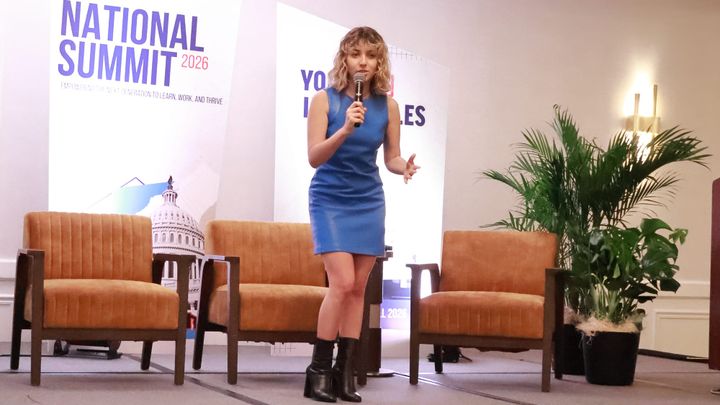
Bennet made the statement June 13 during a youth-focused Democratic gubernatorial forum at the Community College of Aurora hosted by Young Invincibles with Colorado Black Women for Political Action and other partner organizations. Bennet and Colorado Attorney General Phil Weiser answered questions about housing, education, health care and other issues affecting young people.
A moderator cited an analysis of Centers for Disease Control and Prevention data by the nonprofit newsroom Stateline that found the suicide rate among Coloradans ages 18 to 27 increased 19% from 2014 to 2024. The moderator asked how the candidates would strengthen access to mental health services and support. Partway through his answer, Bennet turned to student phone use.
“If I’m elected governor, I would work to try to ban phones and social media bell to bell in Colorado because our kids are spending three months of the year on their phone, and that is not helpful with the mental-health situation in Colorado,” Bennet said.
Moderators ask about Colorado’s youth mental-health crisis before U.S. Sen. Michael Bennet answers off camera during a June 13 gubernatorial forum at the Community College of Aurora. Video by Andy Green/FoxTalk.
The statement was not Bennet’s first call for statewide school phone restrictions.
His campaign proposed a statewide ban on cellphones in classrooms in October 2025. The proposal included exceptions for students with disabilities and those who need phones for learning or medical reasons. Bennet described restrictions as a way to reduce classroom disruptions and respond to concerns about students’ mental health.
At a separate candidate forum in May, Bennet advocated for what Colorado Politics described as a total ban on cellphones in schools. He argued that a state law requiring districts to establish their own policies had done “literally nothing.”
FoxTalk asked Bennet’s campaign whether the restriction would cover the entire school day, what Bennet meant by banning social media and whether the exceptions included in his earlier proposal would remain.
In an emailed response, the campaign said Bennet’s reference to banning social media meant access through cellphones and confirmed that exceptions for disabilities, medical needs and instructional use would remain. The campaign did not specify whether “bell to bell” would include lunch and passing periods. It said Bennet would work with school districts, teachers and families on the ban’s design.
Colorado schools currently set different rules
Colorado law requires every public school district and charter school to adopt, implement and publish a policy governing student communication devices by July 1.
The law requires districts to describe their restrictions and any exceptions. It does not impose one statewide ban.
Overland High School in the Cherry Creek School District uses locking Yondr pouches during its academic day. Students keep their pouched phones with them, but the school allows them to unlock the devices during lunch, in its Flex space and at dismissal.
Northfield High School’s policy for the 2025-26 school year prohibited phones and similar devices in classrooms but allowed them during lunch, passing periods and off periods.
Denver Public Schools has adopted a districtwide bell-to-bell restriction that will prohibit access to personal communication devices throughout the school day beginning next school year.
Two students see different sides of the restriction
Two rising seniors interviewed separately by FoxTalk described different experiences with phone limits.
Ilhan Salad, who attends Overland High School, said reducing her phone use at school has helped her concentrate.
“Ever since I’ve limited my phone usage at school, I’ve been more focused,” Salad said. “I’ve been more focused on my goals and getting my work done.”
She called phones a distraction and said she supports her school’s decision to limit access. The main downside, she said, is not knowing what is happening outside school and losing a source of entertainment during the day.
Kamilla Irfano, a rising senior at Northfield High School, said adults often treat student phone use as though it consists only of social media and entertainment.
“When we use our phones, they believe it’s only for social media and entertainment purposes,” Irfano said. “When in reality, there’s definitely more things, like communication.”
Irfano said high school students may have off periods and use their phones to coordinate work, transportation, family responsibilities and other opportunities.
“With this bell-to-bell schedule, it’s kind of difficult to arrange communicating for work or for different opportunities if they’re all locked away,” she said.
She said she understands the argument that restrictions could improve concentration and protect students’ mental health. But she questioned whether a full-day rule would account for the different reasons students carry phones.
“I do understand and acknowledge that there are benefits,” Irfano said. “But I also believe that they’re not taking into full consideration how the students are truly impacted.”
Bennet’s proposal would go beyond Colorado’s current district-by-district requirement by seeking a statewide restriction.
Update: This article was updated June 18, 2026, to include a response from Bennet’s campaign about social media access, policy exceptions and implementation.


Comments ()