Wait, CCA has mock trials?
Kevin Frey stood before a jury to defend a fictional fentanyl case, helping turn a campus common space into one of college's most convincing classrooms.
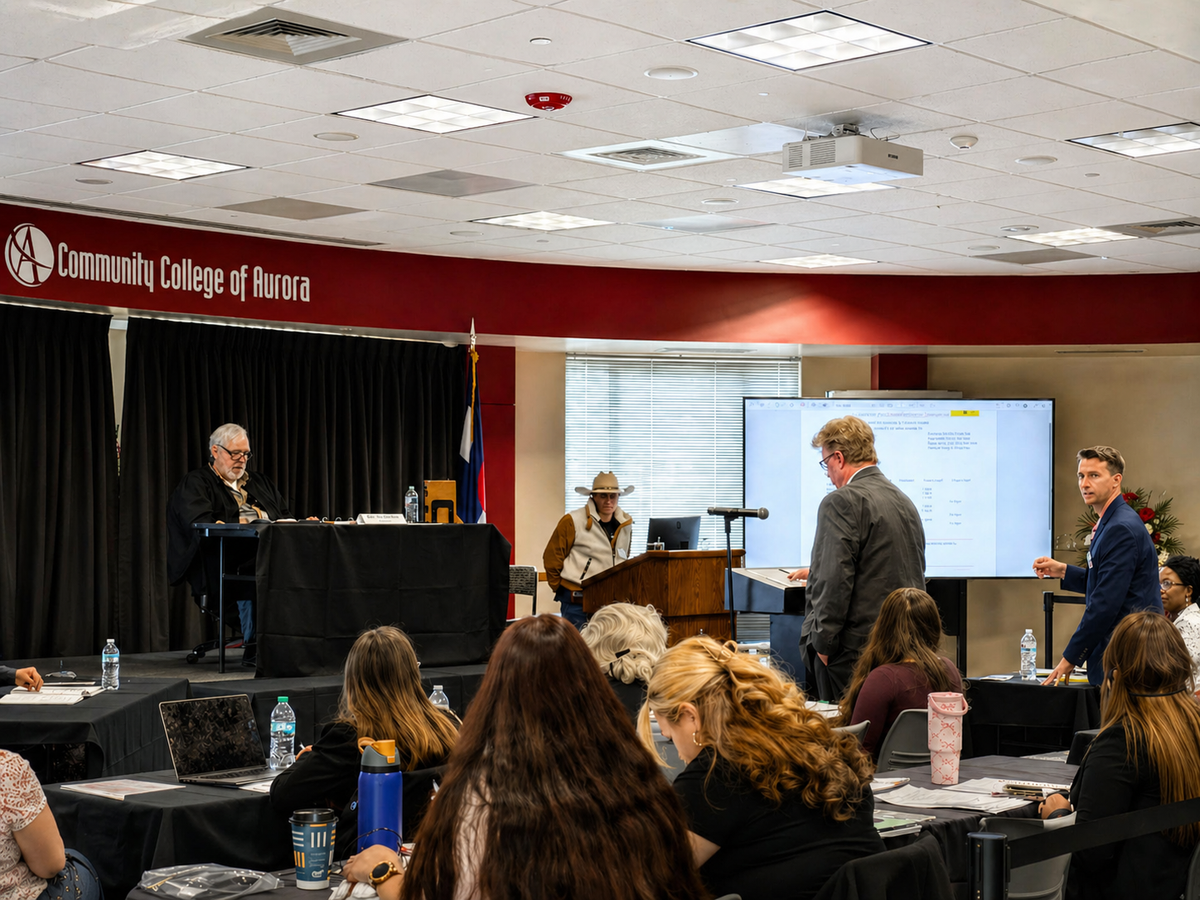
CCA turned part of CentreTech into a courtroom, then handed students a fictional fentanyl case, witnesses, interpreters and a verdict to fight over.
A student doctor took questions about fentanyl. Defense counsel tried to punch holes in the testimony. Interpreters listened, took notes and repeated courtroom language in Spanish. A jury watched from across the room.
For one morning, CCA did not look much like a regular community college campus.
The Spring 2026 Mock Trial, held April 25 at the CentreTech Rotunda, turned a campus common space into a courtroom for The People of the State of Colorado v. Peyton Reid, a fictional criminal case involving fentanyl, a collapse and the death of a character named Victor Chase. The event brought together students from paralegal, criminal justice, translation and interpretation, anthropology and theater programs.
A fictional case with real pressure
The case centered on whether Peyton Reid could be held responsible after Chase consumed a brownie that, according to students in the trial, involved fentanyl. Ethan Eggleton, who played Dr. Jamie Cruz, said his testimony was meant to establish what happened medically.
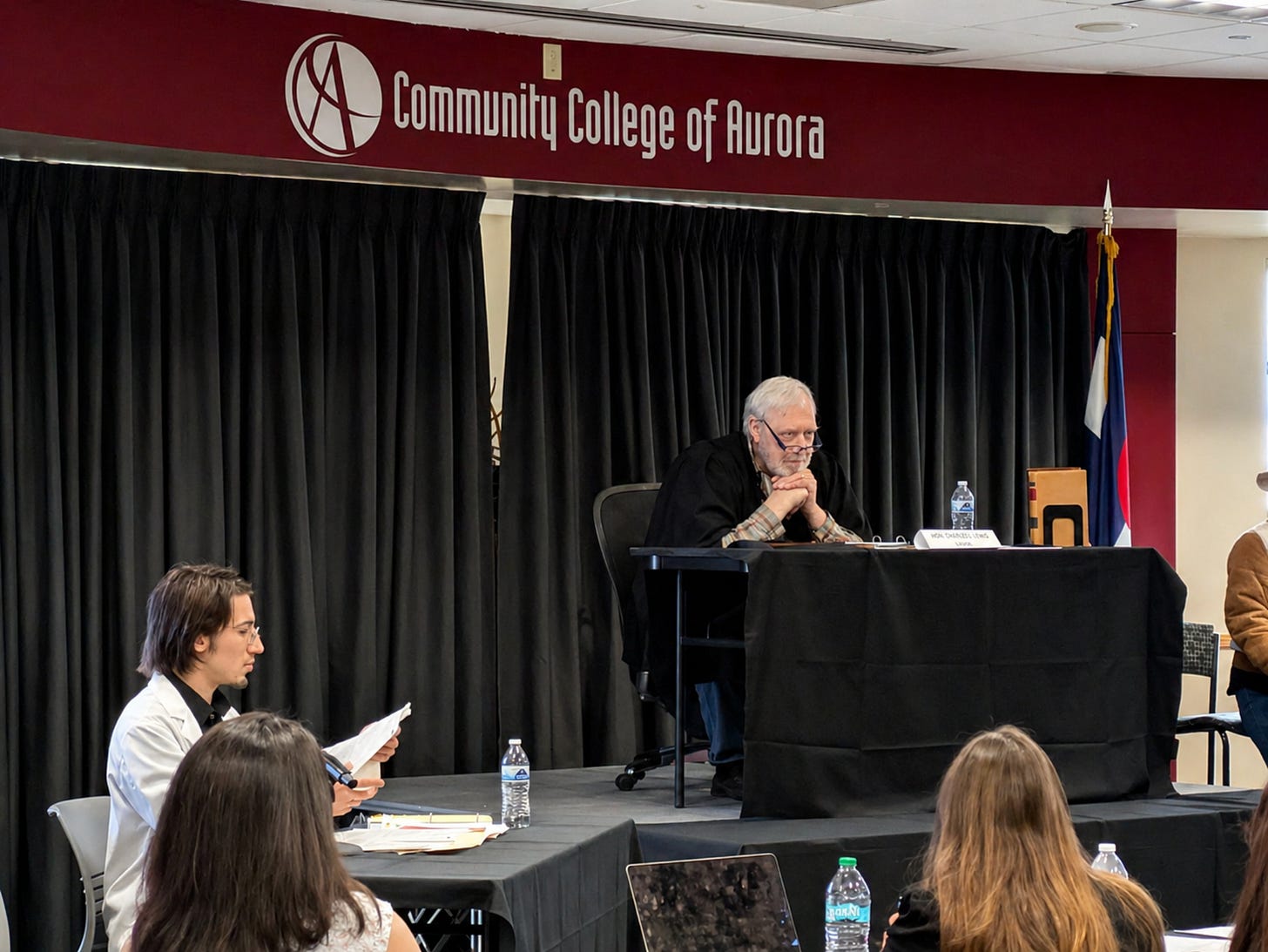
“There’s a lot of confusion about the substances he consumed,” Eggleton said. “He had alcohol in his system, and he also had marijuana in his system and also fentanyl.”
Eggleton said the medical evidence pointed to fentanyl overdose. The challenge was not just knowing the fictional facts, but sounding like someone who belonged in the witness role.
“Trying to keep the facts in my head and just sound professional,” Eggleton said. “Not saying ‘uh’ and filler words.”
The fight over responsibility
Kevin Frey, a defense counsel in the mock trial, said the fight was not only over what caused Chase’s symptoms. It was over whether Reid could actually be blamed for it.
“The real fight is who’s responsible for it,” Frey said.
Frey said his defense focused on whether jurors could know Reid put fentanyl in the brownie. During questioning, he said he tried to challenge the doctor’s statements without attacking the witness personally.
“My strongest defense was that people did not have knowledge that he actually put fentanyl in the brownie,” Frey said.
After the jury reached a decision, Frey said Reid was found not guilty on the first two counts, including possession with intent to dispense or distribute a substance containing fentanyl and intentionally causing physical impairment by administering a drug without consent. Reid was found guilty on the third count, reckless endangerment.
Frey called the result a win for the defense.
“Considering the seriousness of the charges, this was a win for the defense,” Frey wrote after the trial.
Interpreters had to stay exact
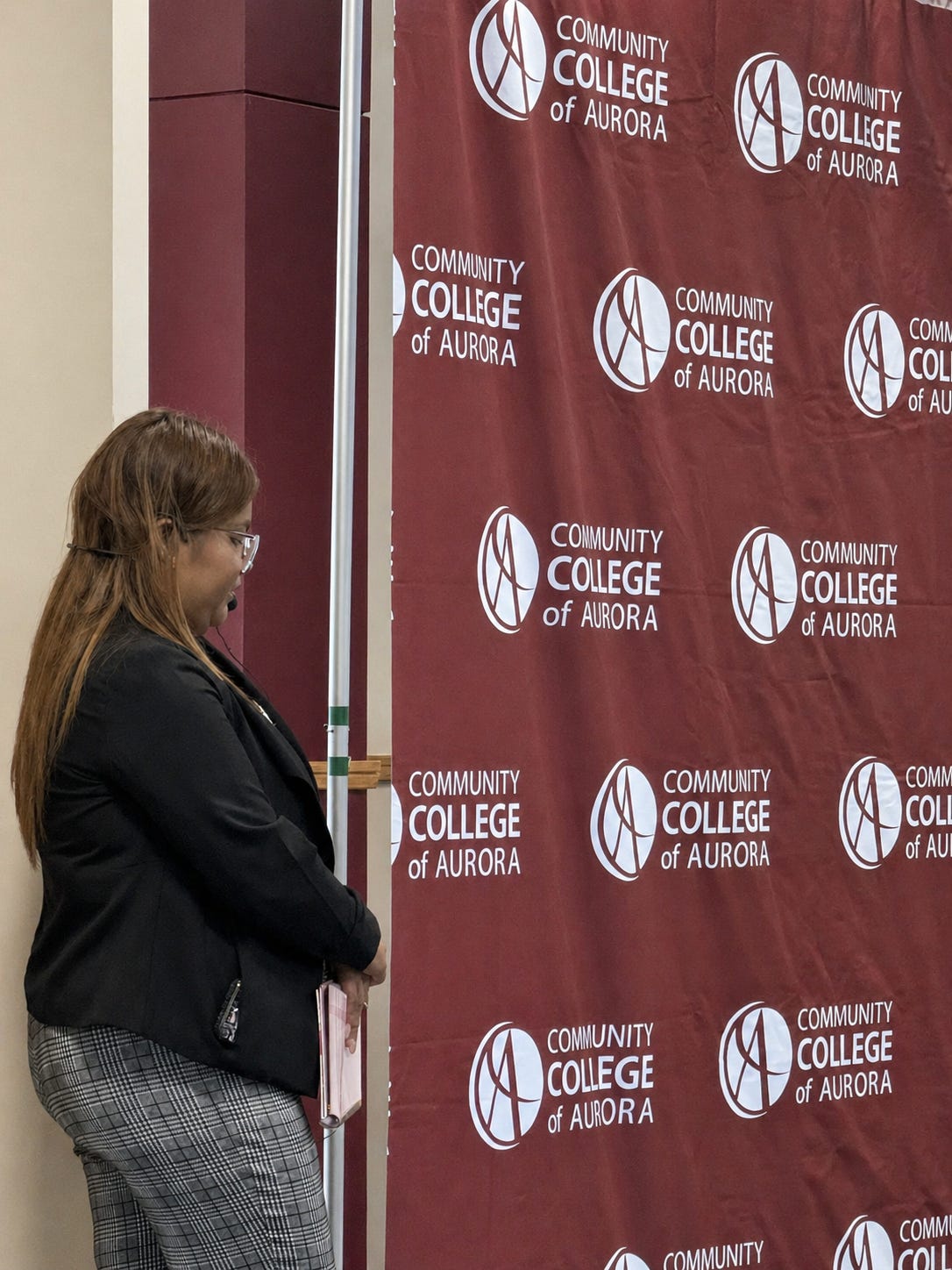
The trial also included Spanish-language interpretation, which made the event more than a simple courtroom performance. Luzelena Barraza, an interpretation instructor, said student interpreters had to listen to each question, take notes and interpret exactly what was asked. Then they had to listen to the witness and interpret the answer.
“You need to be exact,” Barraza said.
If interpreters missed something, Barraza said, they had to ask for repetition or clarification. Before the event, she said, they also needed to review the case, prepare a glossary and understand the material.
“Once you’re there interpreting, it’s just staying calm and listening,” Barraza said. “That’s the main skill.”
Hands-on learning across programs
Patricia Shaw, department chair of Education, Languages and Justice, said the mock trial gave students something closer to workplace practice than a normal class assignment.
“Career and Technical Education programs are very strong here in CCA, and one of the requirements and the best experiences that we can give the students is hands-on experience,” Shaw said.
Shaw said the event worked because multiple programs could use the same fictional trial from different angles. Paralegal and criminal justice students could practice legal roles. Theater students could perform characters. Translation and interpretation students could practice courtroom interpretation. Anthropology students also fit into the scenario.
“This is a great opportunity for them to see exactly what a trial would look like,” Shaw said.
For Shaw, the point was not whether one side won.
“No one’s here to win or lose a case,” Shaw said. “Everybody’s learning something.”
More than a class exercise
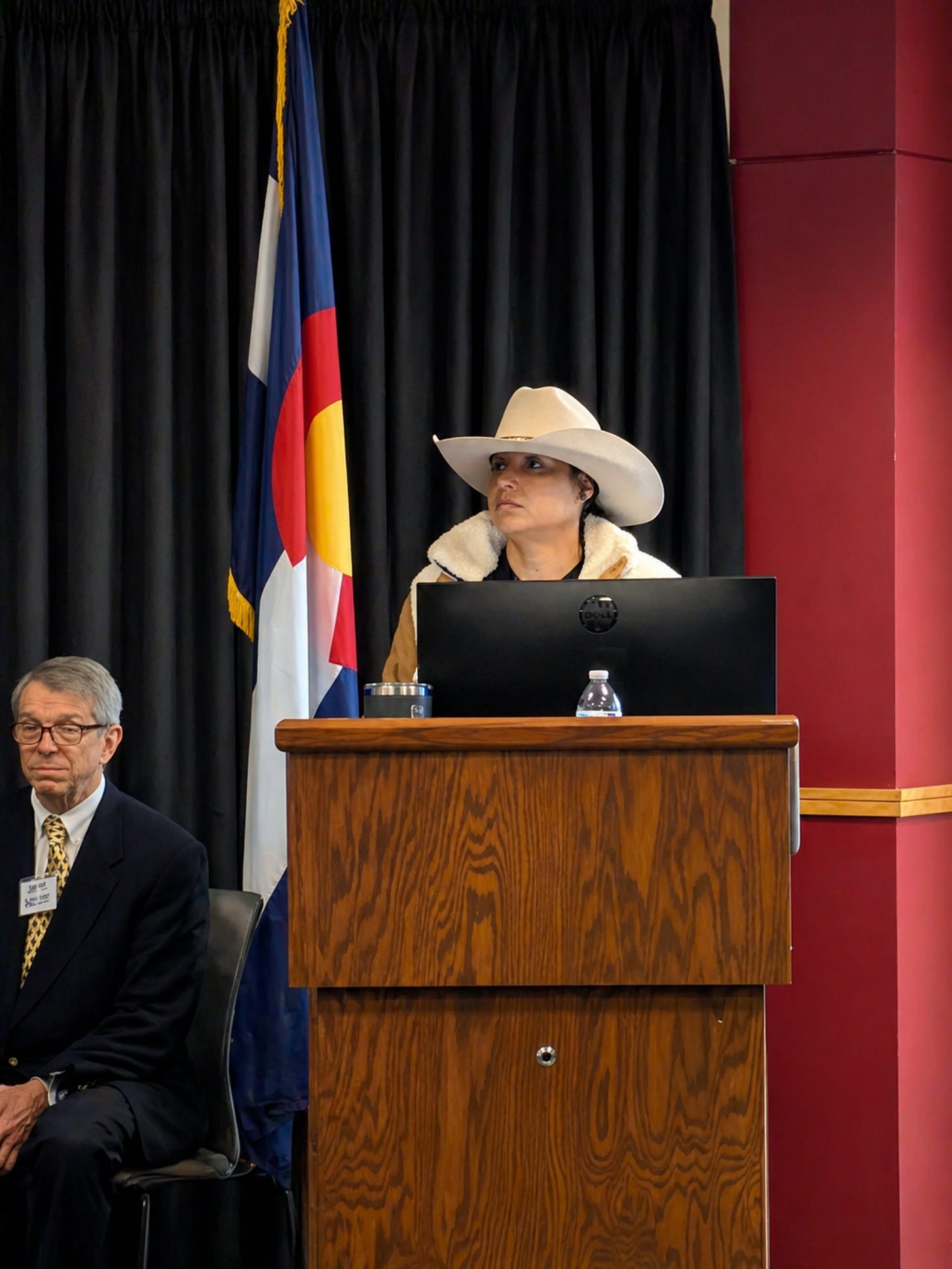
Still, the mock trial had more pressure than a worksheet or class discussion. Students had to stand, speak, question witnesses, respond to objections and keep going while a judge, jury and audience watched.
Frey said that made it different from a normal assignment.
“A mock trial is taking all the knowledge, all the information you’ve learned from all the classes and putting it together in a trial,” Frey said.
Shaw said CCA plans to keep holding mock trials at least once a year.
Asked what she would tell a student who hears “Wait, CCA has mock trials?” Shaw had a simple answer.
“Come and watch,” she said.


Comments ()