Skip to content
Student-led reporting for Colorado Founded at the Community College of Aurora · Independent and expanding statewide
Independent student journalism
FoxTalk

Smithsonian leader says colleges could help build future immersive projects
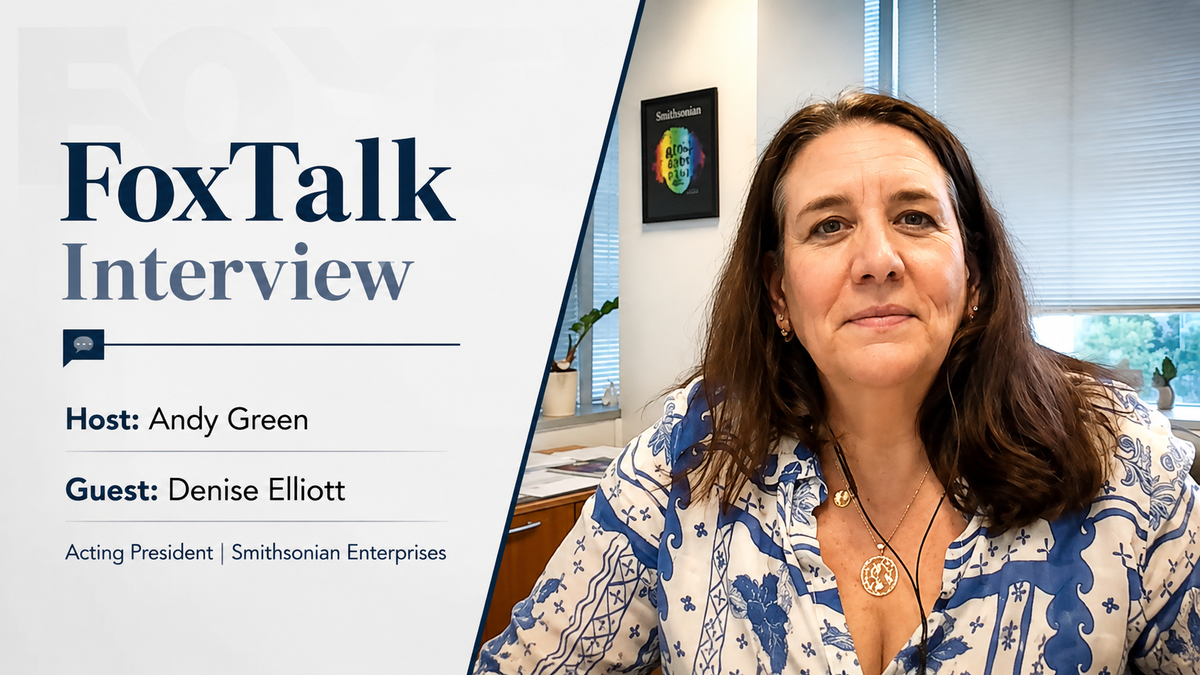
With Starstruck now open in Denver, Denise Elliott says student and university participation in future immersive projects is possible, but no dedicated Starstruck internship exists yet.
Smithsonian leader says colleges could help build future immersive projects

Asked whether a college could work directly on a future Smithsonian immersive project, Denise M. Elliott's answer was immediate.

“I don't see why not.”

Elliott, acting president of Smithsonian Enterprises, said schools with strong programs in fields such as history, science or veterinary studies could potentially match with a future Smithsonian topic.

“Finding a topic that a school would want to work with us that aligns with us, I think it's entirely possible,” Elliott said in an Aug. 3 interview.

The opportunity isn't here yet

For college students, though, that possibility is not yet an application they can fill out.

Elliott said there was no paid internship or fellowship attached specifically to Starstruck, the Smithsonian's new traveling virtual-reality experience. She also said Smithsonian Enterprises, the business unit she leads, did not have official internships set up within the division.

The first immersive project was built with existing staff, she said.

“I could absolutely see that down the road there would be internships and employment available just specifically to do with immersive experiences,” Elliott said. “But right now, there is not.”

The broader Smithsonian does offer internships across its museums, research centers and offices. Its current public internship catalog includes opportunities in fields ranging from astrophysics and science writing to education and museum work. A review of that catalog found no Starstruck-specific internship listing.

Starstruck is now operating at the Fever Immersive Center at York Street Yards in Denver. The free-roam virtual-reality experience lasts about 40 minutes and uses astronomical data from the Smithsonian Astrophysical Observatory to move visitors through scenes involving telescopes, stars, exoplanets and a black hole.

The project was developed with the observatory and Fever, with Smithsonian Enterprises overseeing the Smithsonian's business side of the collaboration.

Fever's current Denver ticket page includes students in a reduced ticket category. For students interested in working on immersive projects, however, Elliott described any deeper role as something that could come with future projects rather than an existing Starstruck program.

Where colleges could fit

She said a university could potentially participate by matching its academic strengths with a future Smithsonian topic. She also described colleges as possible hosts for an immersive experience, saying the basic setup requires servers, Wi-Fi and a large room.

From the production side, Elliott said immersive projects require people with different skill sets. If a university had students interested in that work, she said, “I could see that happening.”

What Starstruck has to prove

Whether there will be another project at all depends on how Starstruck performs.

Elliott said the project must make sense from both a business and mission perspective. The Smithsonian Astrophysical Observatory is pleased with the mission result so far, she said, but the financial side is still being assessed.

“The amount of effort for the amount of financial return has to make sense,” Elliott said. “So we don't know that yet.”

That business test was part of the project before launch. Smithsonian Board of Regents minutes from October 2024 described a location-based immersive-experience pilot, including vendor negotiations, financial assumptions and plans for a revenue-sharing model.

Elliott declined to give a specific financial target. She said the Smithsonian wants to recover the money it invested and make additional revenue, while also considering ticket sales, overall reach and how many people experience the material. At minimum, she said, the Smithsonian wants the project to break even.

The next decision, Elliott said, is whether Starstruck has worked well enough to justify another immersive experience and, if so, what the next topic should be.

“We've done space with a Smithsonian Astrophysical Observatory,” she said. “What's our next frontier to bring Smithsonian out into the public?”

Elliott estimated that the Smithsonian could have that decision made by early 2027. She called January a guess and said there are still people across the institution who need to agree on what comes next.

When I asked whether that timeline referred to student internships, Elliott said it did not. The January estimate, she said, was about “kicking off a new experience in earnest” and “working on something new.”