“I worked super hard”: Honor students got recognized
Amaya Duran earned her place among newest PTK inductees, where white roses, lit candles and family applause turned academic work into public honor.
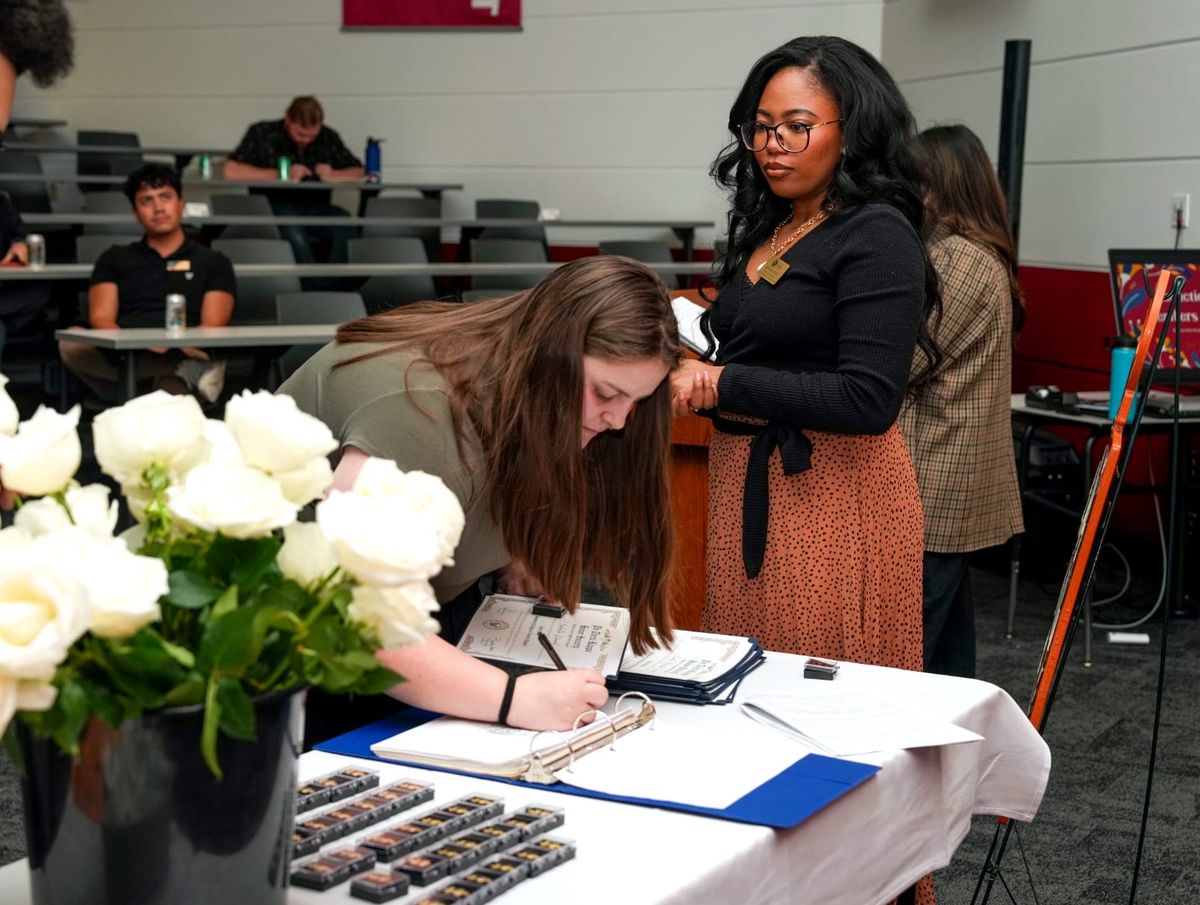
At the front of the room, students stood holding white roses and lit candles.
For a few minutes, Phi Theta Kappa induction night at the Community College of Aurora felt bigger than a routine campus event. Family members and faculty filled the room. A video message from CCA President Dr. Mordecai Brownlee and remarks from college leaders gave the ceremony formality and weight.
But what gave the night its real energy was not the script.
It was the feeling, visible on students’ faces, that they had worked for this.
A room built around recognition
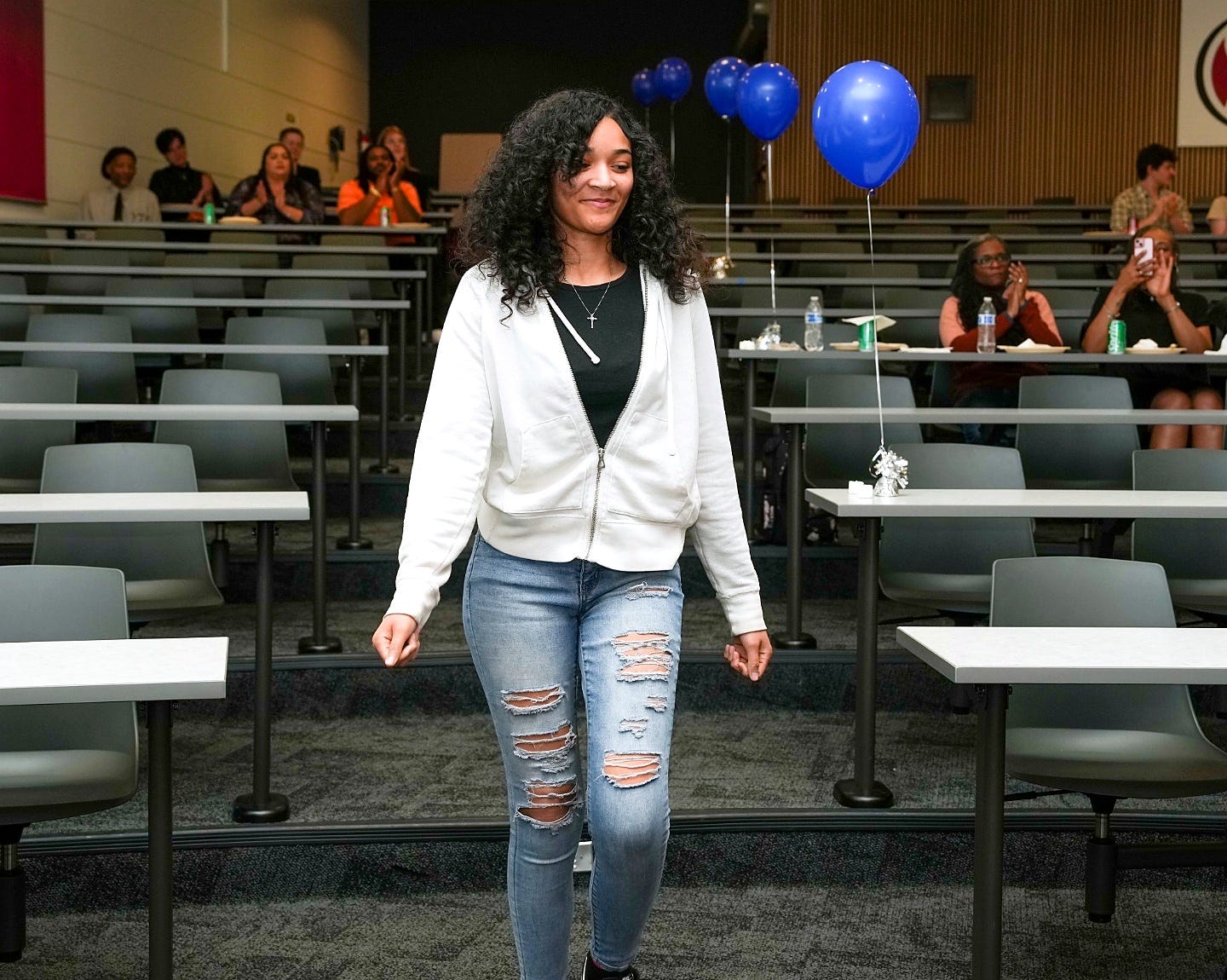
Roughly two dozen students were recognized during the ceremony, though not all of those inducted appeared to be present. Some looked excited. Some looked proud. Some looked a little nervous. The mood in the room leaned toward something deeper than simple celebration. At a commuter college, where many students move quickly between class, work and home, the ceremony offered something harder to come by: public recognition.
The work behind the moment
For newly inducted student Amaya Duran, the moment felt personal.
“I worked super hard,” Duran said, explaining that she had pushed herself to reach the 3.5 GPA required to join. Having signed up in January, she said she was especially happy to be there.
Advisor Jacqueline Garcia said that is exactly what the night is meant to honor.
“Induction represents recognizing the effort PTK members placed to get here,” Garcia said, adding that many CCA students are juggling multiple responsibilities in their everyday lives.
Formal, but not stiff
That sense of earned pride ran through the room.
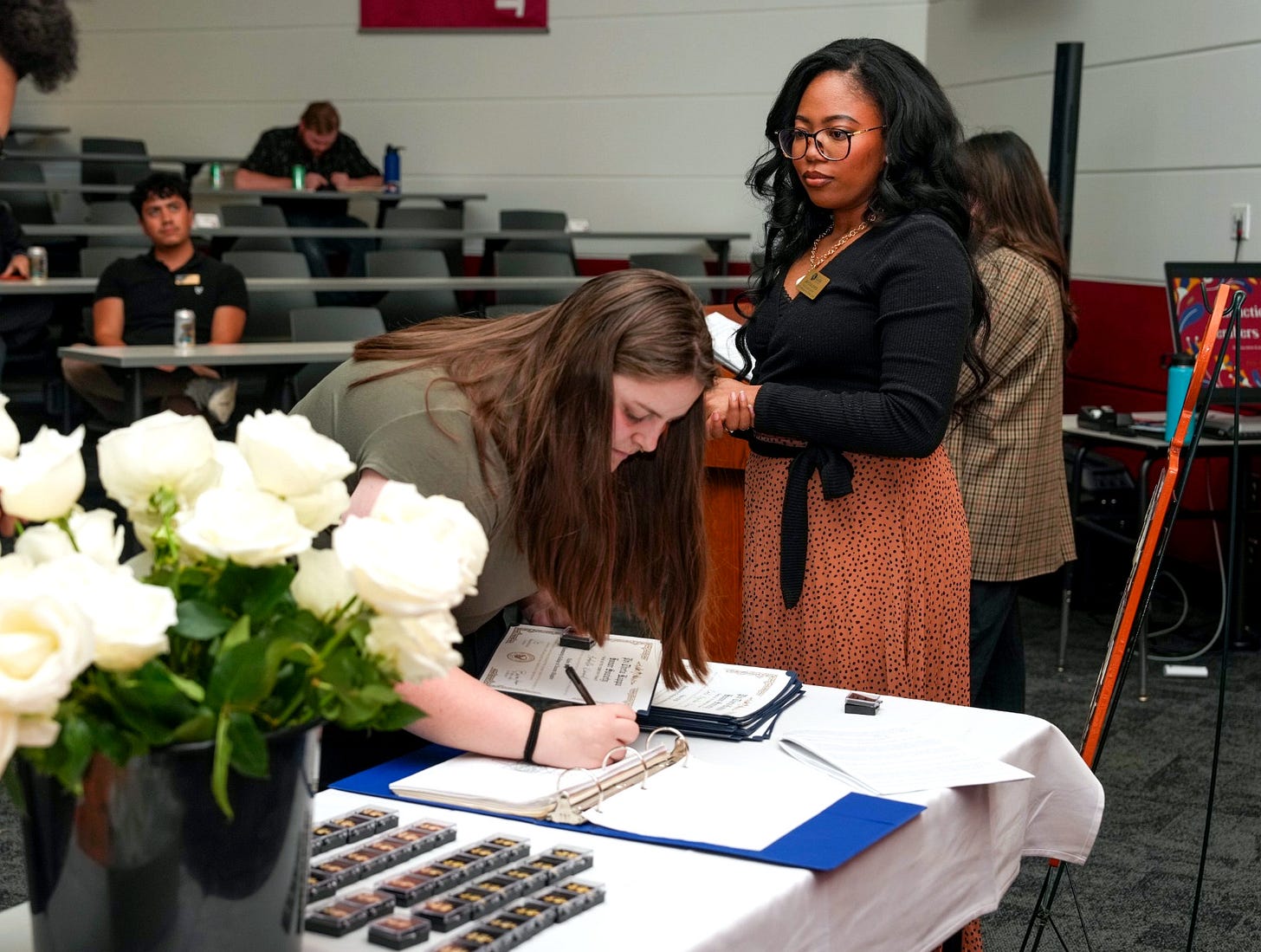
The ceremony was formal, but not stiff. Students dressed for the occasion in jackets, dresses, oxfords and other business-casual clothes. Officers stood out in sharper, more coordinated outfits. Candles and white roses gave the night a ceremonial feel that made it seem more serious than an ordinary student club event.
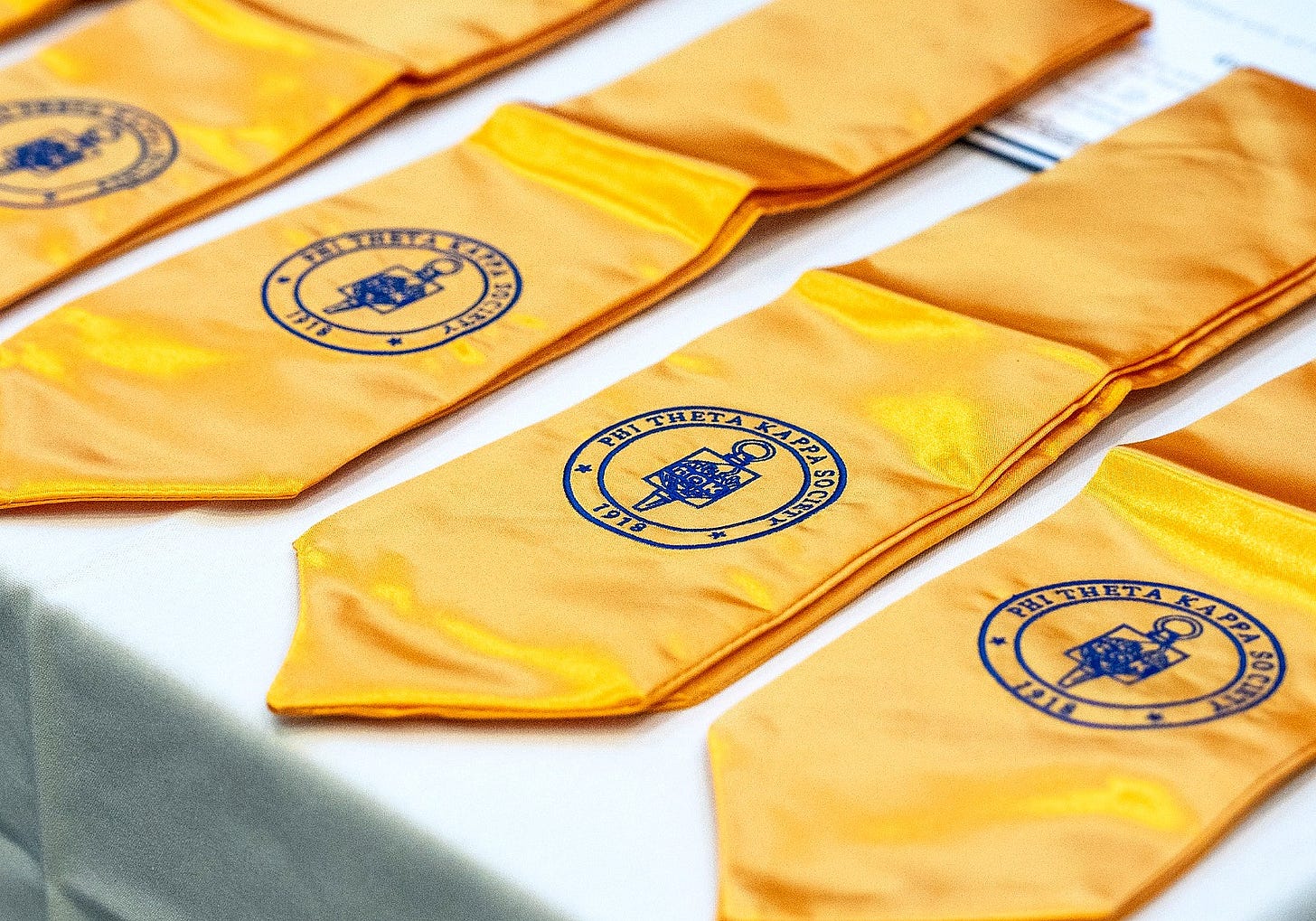
That mattered because PTK is not simply asking students to join another campus organization. It is asking them to see themselves as students whose academic work, transfer goals and leadership potential deserve to be recognized in public.
The PTK president framed that meaning simply, saying the organization allows students “to feel seen and supported.”
For student Stellan Knowles, that feeling was part of the appeal. He said being part of PTK made him feel like he was “part of something real.” He also said he believes joining could open more opportunities for him.
That mix of belonging and ambition may be the clearest explanation for why the ceremony landed the way it did.
Belonging with a practical payoff
Scholarships were part of the conversation throughout the night, and so was the idea that PTK could help students build a path beyond CCA. For a college where many students are balancing demanding schedules and thinking seriously about transfer, that promise gives the organization practical weight. But the ceremony suggested that PTK means more than a credential. For students standing at the front of the room with candles in their hands, it looked like a chance to be recognized for work that often happens quietly.
Garcia said that quiet work is easy for the audience to miss.
“Each student has a story and narrative,” she said. “They have demonstrated strong academic achievement and for them to get recognized on this is huge.”
A public pause at a commuter college
That observation helps explain why the night stood out.
Commuter colleges do not always offer many moments like this. Much of campus life can feel temporary or transactional. Students show up, go to class and leave. Induction night pushed against that rhythm. It created a setting where academic achievement was not just recorded, but staged and witnessed.
Even the formality played a role.
The dressed-up officers, the family members in attendance, the remarks from campus leaders and the visual rituals all gave the ceremony a sense of occasion. It did not feel overblown. It felt respectable. It felt like something students could be proud to bring their families to.

By the end of the ceremony, the strongest impression was not that PTK had successfully advertised itself. It was that students wanted a moment like this. They wanted a chance to mark that their effort had led to something visible, shared and real.
At CCA, PTK induction night offered exactly that.
Correction: An earlier version of this article misstated Duran’s sign-up timeline. She had been signed up since January, not since the previous week.
Comments ()