Full interview and transcript: Barb Kirkmeyer on tuition, roads and Colorado colleges
The Republican candidate for governor answered student questions about higher-education funding, rent, transportation, health care, workforce training and Scott Bottoms’ criticism of four-year colleges.
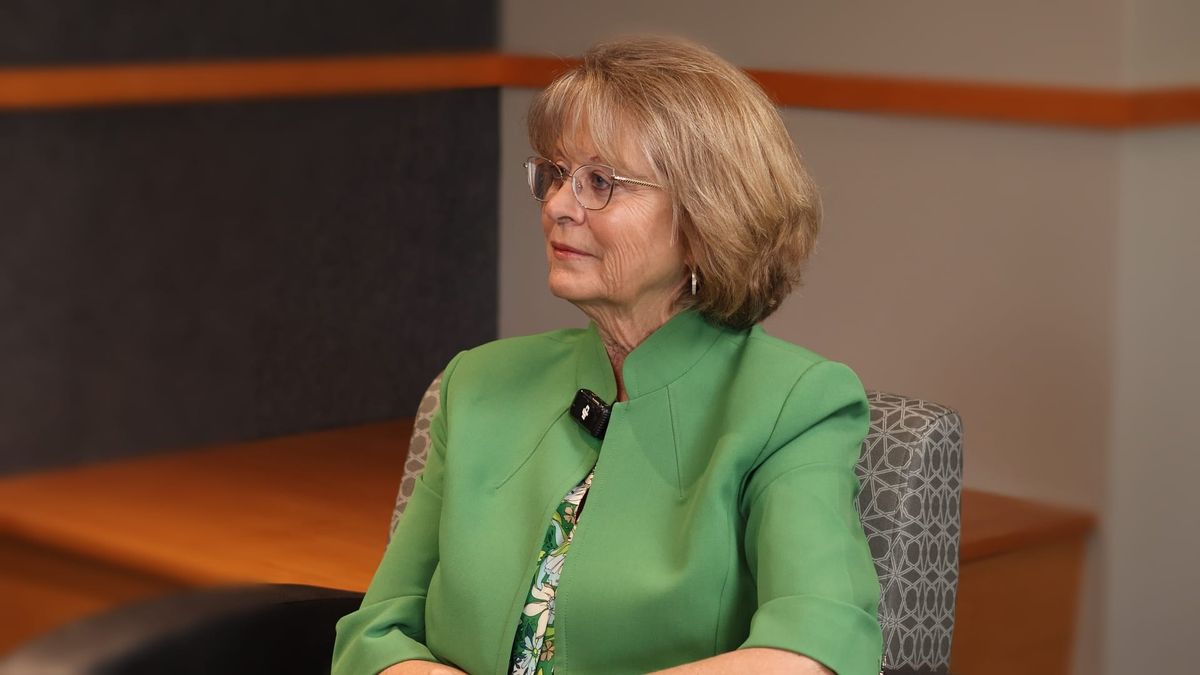
Colorado state Sen. Barb Kirkmeyer said she would protect colleges’ base funding, limit tuition increases and cut spending within the Colorado Department of Higher Education if elected governor.
During a roughly 20-minute sit-down interview, Kirkmeyer also defended Colorado’s four-year colleges after Republican rival Scott Bottoms accused them of doing “more indoctrination than educating.”
“I don’t know where he’s gotten that information from, and I have not ever heard that before,” Kirkmeyer said.
The interview ranged from college affordability to Kirkmeyer’s $6 billion transportation proposal. She said the road plan would draw from existing transportation balances, redirected revenue and public-private financing.
“We know that there’s about $6 billion, and we actually kind of went low on that,” she said.
Kirkmeyer also said students should judge her first year as governor by three measures: tuition increases, financial aid and state funding for higher education.
Several questions in the interview were submitted by The Metropolitan, MSU Denver’s student newspaper. The interview was produced by FoxTalk as part of a question-sharing and distribution partnership with The Metropolitan.
Watch the full interview
Interview topics
- Community-college funding and tuition
- Proposed cuts at the Department of Higher Education
- K-12 accountability
- Property taxes and renters
- The $6 billion transportation proposal
- Transportation for students without cars
- Health care and prior authorization
- Scott Bottoms’ college “indoctrination” statement
- Executive authority over higher education
- Transfer grants
- Financial aid and student accountability measures
- Community-college partnerships with employers
Transcript
Editor’s note: This transcript has been lightly edited for readability by removing repeated words and false starts. It preserves the sequence and substance of the interview. Direct quotations should be checked against the video before republication.
Interview Transcript
ANDY GREEN, FOXTALK
Community College students often work, commute, and support families while attending classes. What is the first item you would put in your proposed state budget specifically to help them?
BARB KIRKMEYER
So, actually, I have been a state senator for the last six years, and four of those last six years I have been on the Joint Budget Committee. So, the items that I would put in the budget in the governor's budget request to the legislative branch is to ensure that we are funding the core basic part of the universities and the community colleges' budgets.
There is an item within the budget that's specific to that, and for the last few years the governor's office under this administration, the current administration, has been undercutting that. And so I've been working to make sure that the funding is at the base level that it needs to be at. It's an agreed-upon level, for the most part, that has been in place for, at least that I know of, for at least the last six years.
So, again, it's those base dollar amounts that help both the community colleges and the four-year institutions, so all of higher ed, be able to keep their doors open and hopefully keep tuition low. That's the goal, is how do we keep tuition low.
ANDY GREEN, FOXTALK
Your affordability plan calls for a 10% reduction in personnel costs across state agencies. Would that apply to the Department of Higher Education or the central administration of the Colorado Community College System?
BARB KIRKMEYER
It would apply more to the actual department itself, and it's anywhere from 5 to 10% cut across their personal services and their operating lines. That's a measure that was taking place after we had the Great Recession back in 2001.
But when I worked for Bill Owens in 2001, after we had all those major fires, we had a recession going on in Colorado, we were required to reduce our general fund operating budget by that amount. So I believe it can be done anywhere from 5 to 10%.
That would really help us get back in line our structural deficit that we have in the budget. And it would apply not to all of the higher education institutions themselves.
So, example, the community colleges or the University of Northern Colorado. I mean, it wouldn't apply to them. It would apply to the department, the administrative part of the higher education department.
ANDY GREEN, FOXTALK
The next couple questions come from the Metropolitan State University of Denver's student newspaper. Your education plan says programs should show evidence of improved learning before their funding continues. Is that intended only for K-12 schools, or would that also apply to college and workforce programs?
BARB KIRKMEYER
In my education plan, I'm talking about the K-12 education system, that there has to be accountability.
So we will continue funding because our constitution, I will continue funding it. And as I have as a state senator and gotten it to the point where we've gotten rid of the budget stabilization factor. But our constitution requires that we have a free public school system throughout the state of Colorado that is fair, consistent and uniform and thorough.
So that's the first thing. Our constitution also requires that we increase the amount of funding that we use, that we give for total programs by inflation every year as well. So those are two constitutional mandates that I have abided by and will continue to abide by.
But so and I've been able over the course of the last four years, five years, been able to get increases to education, K-12 education. Like in the special education categorical and other places, about 1.3 billion dollars worth of additional funding without increasing taxes. And so after we got to where we got the budget stabilization factor paid off and we're not doing that any longer, we're not balancing the budget on the backs of students in K-12 education.
Now it's time that we start looking at our schools. How do we get to accountability? How do we get to where that we have more than, you know, it's kind of dismal to me that we have about 60 percent of our kids that are in the third grade that are not reading at a third grade level. So that's what I mean by the accountability piece.
They've got to be able to read by the third grade and our students need to be able to do simple math by the eighth grade. And right now we're failing in both of those areas and we're failing our students. So I'm going to work with the school districts and develop a plan.
There's been other states like, for example, in Mississippi that have developed plans where they have summer school and other things that go on through the summer that really start increasing. And these programs have worked to really increase the children's ability to read and comprehend what they're reading. And I think those are things that we need to start with first.
But I will certainly work with the school districts to make sure that we get that plan in place and that we start working to get our kids being able to read by the third grade.
ANDY GREEN, FOXTALK
You have made lower property taxes part of your affordability plan. How would a student who rents an apartment actually receive any of those savings?
BARB KIRKMEYER
Actually, you know, the the owners of the apartment building are going to be able to hopefully receive some value in having property taxes reduced or at least not increase by such leaps and bounds as they have since the repeal of the Gallagher Amendment.
So that should help that they, you know, hopefully they wouldn't have to raise prices for rentals or at least be able to keep them steady and stabilized. And that would be the goal there. But it's the property taxes that really that the commercial developers, the commercial owners, it would help relieve their property tax relief, give them property tax relief, which should correlate to some relief with regard to rent, or at least again, not having to increase it to pay for increased property taxes.
ANDY GREEN, FOXTALK
Your transportation plan promises $6 billion over four years without a tax increase. How much would come from existing transportation balances, redirected spending and public, private or federal financing?
BARB KIRKMEYER
So it's well, basically all of it would because right now what we have in our state is a mismanagement problem. We're not managing these departments as well as we should be.
I know a lot about transportation because I served on the State Transportation Advisory Committee, helped put together the first ever 20 year multimodal statewide transportation plan. And so there's a lot there that's going on. Like, for example, the project that we have going on the North I-25 corridor.
There have been different phases in that project. And when you, for example, they may, the Department of Transportation may say that it's going to cost a billion dollars to do a certain segment of it. And it may come in underneath that, you know, maybe $800 million or so.
And then they park that money over in a different fund. And so instead of parking the money in different places, we would actually bring it back to one of the pots of money, which there's the seven pots of money basically at the Department of Transportation. We would bring that money back into maintenance and safety of our transportation system and make sure that it's working for us.
What has happened over the course of the last eight years under this administration is dollars that were meant to go to surface treatment. Surface maintenance have been pulled into more of the transit mode of transportation instead of maintaining the system. So that's one way.
There's also the development of more private partner, private public partnerships that we could do a better job at it in this state. That would that would help us invest nearly a billion dollars in a more or more in a more efficient manner. So, again, that we are able to maintain our system and at the same time, maybe even add some capacity to it or certainly start fixing our bridges and our intersections in this state, things of that nature.
So there's things there that we can do as well. And then it's really just about how the department is being managed. They've been they've gotten really top heavy.
This whole administration has gotten really top heavy on employing new employees and creating new offices, just kind of on their own that aren't really that efficient. So there's that. And then also the enterprise funds that were created back in twenty one, two thousand and twenty one under Senate Bill 260 that, again, have been targeted to things other than transportation improvements in our state.
And I think looking at all of those things, we know that there's about six billion and we actually kind of went low on that. But we know there's at least over the next course of the next four years where we could find six billion dollars. And I worked with people who worked at the Department of Transportation and putting together my transportation plan.
So we think we can find that six billion dollars without increasing taxes, but greatly improve our infrastructure system, transportation infrastructure system in our state.
ANDY GREEN, FOXTALK
Your plan prioritizes road repair over spending on bike paths and sound walls. What would it provide for students who cannot afford a car?
BARB KIRKMEYER
Well, it also provides for I mean, the transportation infrastructure, the roadway system is extremely important.
So maintenance of the road and the surface treatment program is important.
But if there is a bike system that's right along with the road and right in there, it would get improvements as well. So having improvements to the maintenance and the surface treatments, treating that surface so that we don't have all the cracks and the bumps and the ruts and the potholes kind of thing to improve safety for everyone. That would be great.
And it would help everybody. It would also help our transit system, the transit system that I'm sure a lot of drivers, a lot of students are using here throughout the state of Colorado as well. So not only just for our community colleges or universities and those students, but think about the students who are traveling on our state highways and our state infrastructure system that are in a school bus.
And so it would improve that as well. So we really want to make sure that we improve the safety of our roadways. Roadways are the infrastructures, bikes, buses, cars, trucks.
Those are modes of transportation. Those aren't the infrastructure. And you have to have sound, solid, safe infrastructure for everyone.
And that would help improve for not just students, but for everyone who uses and travels our roadways.
ANDY GREEN, FOXTALK
Your health care plan promises prized transparency. What exactly would a hospital doctor or insurer have to disclose before treatment?
BARB KIRKMEYER
That's not really what the plan is about as far as what a doctor would have to disclose before treatment.
but I did carry some bills and was able to pass and relieve this prior authorization, which I don't know if you've ever had to go in for any kind of treatment or services or resources through a hospital or a medical provider. But a lot of times it was in place where before you could receive your treatment, there would have to be prior authorization from the insurance company.
And even with Medicaid, there would have to be prior authorization through Medicaid, which essentially is in health insurance here in the state, health and behavioral health insurance here in the state of Colorado. So I've been able to get those areas relieved so that people can go in. And once they start their treatment, they don't have to be going back and getting reassessments.
So that is one way that would improve, not necessarily that I'm checking up on what the doctors are doing, but improving service to those individuals that need medical services that they don't have to continue to go through these prior authorizations. I had a friend who had cancer, who was diagnosed with cancer. And before she could get her treatment, she had to keep going back and getting all these prior authorizations done through her insurance company before she could get the much needed treatment that she needed.
So, I mean, I get that the insurance companies want to double check on, you know, what kind of medical services or medical resources that they're providing to the patient. But at the same time, they're not the doctors. And if the doctors are prescribing it, then I think maybe we should be following through with what the doctors are saying is in the best interest of their patient.
ANDY GREEN, FOXTALK
Scott Bottoms told Fox Talk that four-year colleges are doing more indoctrination than educating and that community colleges do not have the same problem. Do you agree?
BARB KIRKMEYER
I don't know where he's gotten that information from, and I have not ever heard that before. I think both our community college system and our four-year universities and colleges in the state of Colorado are working to ensure that we are getting individuals, students, the education that they need to become, you know, to have great careers and be able to become self-sufficient in our state.
And I think, you know, when you're entering into a community college or a four-year university, you're at that point pretty much an adult, right? And so you know what your goals are and your vision are, and hopefully you're working through whichever portion of the higher education institution that you choose to work with to get the best education you can so that the career that you want, the dream that you have, that you get to have that fulfilled. But I have not heard of where our higher education is, you know, indoctrinating students and, you know, the people who are paying for that should probably, and that would be the students, should probably make sure that that's not happening.
ANDY GREEN, FOXTALK
You have presented yourself as a candidate who knows how to govern.
What is one change for community college students you could make through executive action without waiting for the legislature?
BARB KIRKMEYER
Well, the first change would be who the executive director is and who's the commissioner of higher education. That would be the first thing that's changed. That is done, it's an appointment by the governor, because that individual sits on the governor's cabinet.
the executive director works for the governor, and he can hold, she can hold them accountable and really look at what we do to improve our community college system. I think there's probably ideas out there.
I think also working with the students that are in the system, you know, the people who have to live with what's being put forward and what they're working their way through, that we could work with them to establish and ensure that the community college system is meeting the needs of the students. And that, I'm sure students have some great ideas on how to maybe make some changes as well within the community college system, and I'd be open to hearing from it.
That where we could work just even outside of the legislative branch to figure out what kind of improvements need to be made within our community college system.
ANDY GREEN, FOXTALK
Young voters often feel disconnected from state politics. What decision during your first 100 days would a college student notice personally?
BARB KIRKMEYER
A decision that they would notice personally, I think it would be for me, it's again, looking back at how do we keep tuition low and how do we make sure that that they're having access to a great opportunity with with regard to a career and a college opportunity, regardless if that's a technical college or a vocational college or or a community college or four year institution, making sure that they have those opportunities and those choices.
One of the programs that I did as a county commissioner is we were able to, we had a great deal of dollars coming in because of the money that from the sale of land that the county used to own, and it was underneath the old hospital. And we had like, I think it was about 60 million dollars coming in. We put that in a trust and we created what is called the bright futures program in Weld County.
And it is for students that are have resided in our state at least 2 years graduating from high school or from anyone that was getting a GED that they could receive a grant of dollars to go and further their post secondary education opportunity. So I would continue to look for things like that to assist with students and individuals being able to continue with their post secondary education needs and wants and things that they want to do to advance themselves in their career.
ANDY GREEN, FOXTALK
Would you support a state grant for students who complete an associate degree and transfer to a Colorado public university?
BARB KIRKMEYER
We actually have, I actually have supported legislation and helped create the Colorado Opportunity Fund that would do things similar to that.
So I'm open to looking at that and it has to also be something that we can afford within our budget.
ANDY GREEN, FOXTALK
One year into your administration, what three numbers should community college students examine to judge whether you helped them?
BARB KIRKMEYER
They should look at the numbers within the budget that I recommended and requested and that I approved through the long bill and through the budget as far as what we've done to assist the community college institutions and the higher education institutions to ensure that we have kept tuition low. They should look at whether or not the increase for tuition was kept down or if it was a 5 or 6% increase or if it was a 2 or 3% increase.
So looking at the tuition rate and the percentage of growth in that and how that works for the students, whether or not we were able to provide adequate financial aid. That's something also that working through the Joint Budget Committee have been able to ensure that the financial aid portion of the funding was kept in place. And then again, also, like I said, the budgetary request that goes to the higher education institutions.
ANDY GREEN, FOXTALK
Which industries would you prioritize for partnerships with Colorado Community Colleges and what jobs should those partnerships create?
BARB KIRKMEYER
Oh, my gosh, I'm like open to hearing from anybody or any industry. I mean, obviously, you know, we talk a lot about like the health care industry or maybe the aerospace industry or the engineering or, you know, the oil and gas industry. Those are all, you know, predominant industries here in the state of Colorado.
But I don't think we should leave anybody out. If there is an industry that wants to partner with the state to try and improve our educational opportunities for Coloradoans, I think we should be looking at all of them. Whoever wants to step forward and help out.
I mean, there's, I think there's just going to be a lot. I mean, thinking about even like all the whole AI industry or just you never know what new innovation is going to come up. So I would hate to try and limit it to just one or two or three.
But let's, if somebody's got some great ideas, man, I'm all on board. Let's listen to those ideas. Let's figure out how we can be a partner with whomever because you just never know where it's going to lead to.
Comments ()