'A twisted form of grief': Inside a CCA film about blood, paperwork and belonging
In Corinne Nuncio’s short film Blood & Paper, a Tribal ID becomes tangled with family loss, street fights and two sisters who cannot keep avoiding each other.
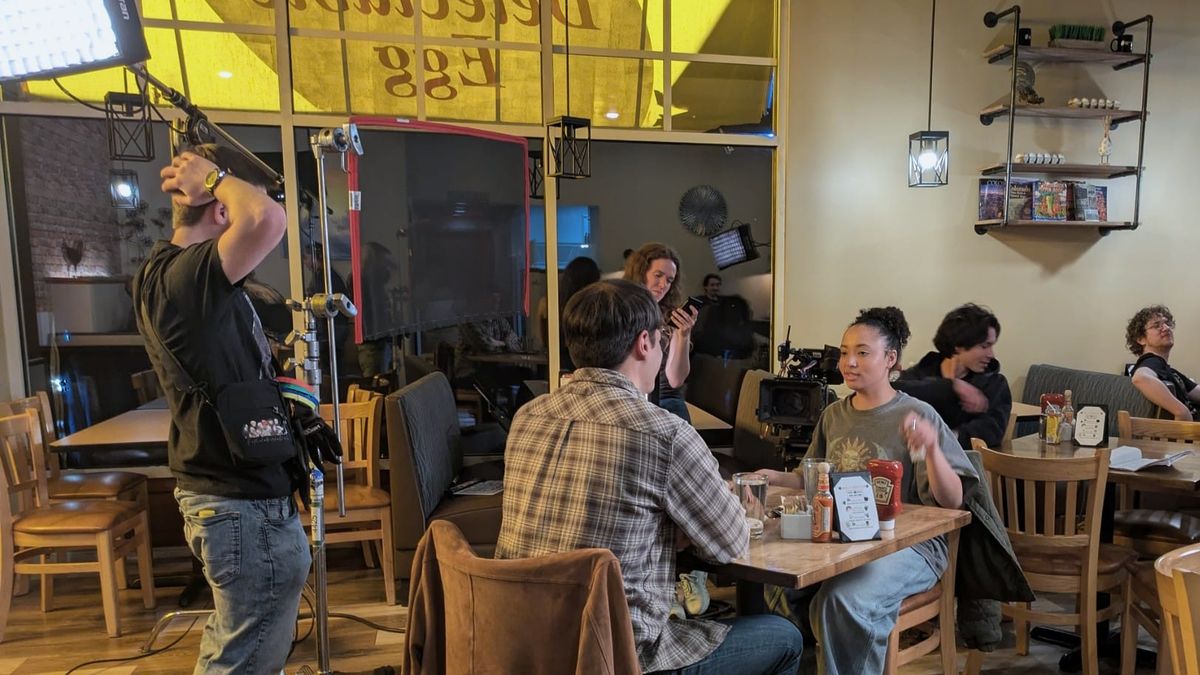
By the time Lena lets her younger sister into her private study, Demi has already been in another fight.
Demi is hurt, angry and determined not to give Lena the satisfaction of a response. Lena kneels in front of her and begins bandaging her injuries.
The sisters have spent much of Blood & Paper finding ways around each other. Now they are close enough to look one another in the eye, and Demi’s silence gives Lena room to say what her sister has refused to hear.
“In that silence, her sister gets away with telling her things that she doesn’t like hearing,” writer-director Corinne Nuncio said.
That confrontation sits at the center of Blood & Paper, a 12-minute short film created through the Community College of Aurora’s Cinematic Arts Department. The film follows Demi, a Native woman searching for records that could help her obtain a tribal ID after the deaths of her parents.
Her search begins with paperwork, but it quickly pulls in everything the documents cannot settle: regret, anger, family responsibility and the fear of being left alone.
The papers keep turning up: stuck to a refrigerator, shoved into a backpack, carried into fights and eventually stained with blood.
Demi wants proof. Nuncio’s film asks what she expects that proof to repair.
“She’s going to try this, because it’s going to take too much work for her to do the internal reflection and figure out what is the root of her problem,” Nuncio said.
The current version of the film focuses less directly on the administrative struggle to receive a tribal ID than earlier drafts did. Nuncio said those versions spent more time on frustration with the system and the question of becoming “quote-unquote official as a Native or an Indigenous person.”
There was not enough room to fully explore that subject in a short film, she said. Instead, the ID became part of a more personal conflict.
Demi believes she might have helped her parents research their family history and secure their own documentation before they died. She did not. Now she treats obtaining the ID as something she can still finish for them.
Nuncio called that fixation “a twisted form of grief.”
“She’s guilty in a sense that it wasn’t something that they were able to get done within their lifetimes, and she wished that they could have experienced that,” Nuncio said. “But she twists it and makes it something that’s not what it was there for.”
The document matters to Demi’s family, Nuncio said, but nobody else expects it to carry what Demi has placed on it.
“Nobody really puts as much emphasis on getting this tribal ID as Demi does in this story,” Nuncio said. “They want it, and they would think it’s an awesome resource and a testament to their own heritage, but they don’t need it for the reasons that Demi thinks she needs it.”
For Malia Henriques, who plays Demi, the search is less about possessing a card than finding somewhere she will no longer feel alone.
“She’s clearly a character that’s looking just for somewhere to belong,” Henriques said. “This was her next attempt at that, at finding a home, at finding her people.”
Demi has lost her parents and believes she may soon lose Lena, who is preparing to leave and build a life of her own. Henriques approached the tribal ID as Demi’s “last hope” of finding a family or place where she could stay.
She also saw regret beneath the search.
Demi had not grown up asking her parents enough about their heritage, Henriques said. By the time she understood the importance of those conversations, they were no longer available to her.
“Now they’re gone, and she doesn’t have the chance,” Henriques said. “So now she’s trying to connect through that.”
A line in the screenplay describes Demi as trying to turn history into a paper trail. Nuncio said that idea accounts for “half of the story.”
Demi is searching not only through family records, but through her childhood and the events that shaped the person she has become.
“Turning history into a paper trail is a large moment of the entire story,” Nuncio said.
The other half begins when the paper trail stops being enough.
Demi’s attempts to defend herself and other people often end in violence. Henriques said she understood the character as someone who hates injustice and wants to defend people who have nobody standing up for them.
“She definitely goes about it in the wrong ways, like taking it out with violence,” Henriques said. “But I’ve always thought that her heart was in the right place.”
To Lena, Demi’s behavior looks less like a defense of others and more like another problem she will be expected to solve.
Sydnie Battie, who plays Lena, saw the older sister as someone who moved almost immediately from grief into responsibility after their parents died. Lena had to care for Demi and think about what would happen to both of them next.
Demi, by contrast, could remain angry.
“She was grieving through her desire to receive legitimacy for who she is,” Battie said. “Her anger was also an expression of her grief, but I don’t think she realized that she had the freedom to grieve, whereas Lena didn’t.”
Lena had to become the adult. Demi had the freedom to refuse.
“Demi, I don’t think she understood that her anger, that her defiance was a freedom that Lena didn’t have,” Battie said.
Henriques did not reject that reading. She said Demi had become a burden and responsibility for her sister. But from inside the character, she did not see Demi as deliberately trying to make Lena’s life harder.
Demi acts before she can control what she is feeling, Henriques said. Lena sees decisions where Demi experiences emotional reactions.
“Demi’s not trying to burden Lena,” Henriques said. “She’s not trying to be a problem.”
For Nuncio, simply allowing Demi into the room is significant. It is Lena’s safe place, a room her younger sister normally cannot enter.
For Battie, it is the point where neither character can keep escaping the conversation.
“They kind of avoid each other in a lot of ways,” Battie said. “You see that throughout the film, but in that moment, there is no avoiding each other.”
For Henriques, Demi enters the scene divided against herself.
She is still furious from the fight. She believes Lena does not understand her. At the same time, she wants the comfort and protection of the sister she is afraid of losing.
“She wants her sister,” Henriques said. “She wants her big sister. She wants that connection with her.”
The pain in the scene, Henriques said, is not primarily coming from Demi’s physical injuries. She wants to open up, but fear and anger keep turning the conversation into another fight.
“She desperately wants to open up, but she feels like she can’t,” Henriques said.
Before filming, Henriques and Battie rehearsed more than the dialogue. They worked through how the sisters might physically respond to each other.
Would Demi allow Lena to touch her face? Would she pull away? What kind of contact would feel familiar, and what would feel like an intrusion?
Those rehearsals helped the actors find what Battie described as a natural big-sister, little-sister energy.
Battie, the oldest of five siblings, drew from her own experience of caring for people younger than her. An older sibling can see a younger one as both an equal and someone almost childlike who still needs protection, she said.
Henriques initially auditioned for Lena, the character she related to more immediately. Nuncio later asked her to read for Demi.
The role began to feel right as Henriques connected Demi’s search for identity with memories of feeling lost and trying to find somewhere to fit in.
Her first day on set began with a fight scene.
“I immediately had to be angry,” Henriques said.
The fight outside the library was also the hardest sequence for her to perform. She had to remember choreography and safety steps while still showing Demi’s anger, fear and pain.
For Nuncio, the most difficult production sequence was a city-street scene filmed across two nights but meant to unfold as one. The crew had to match the makeup, blood and set dressing, even though the fight and stunt work were split between the shoots.
Nuncio said the script supervisor tracked details such as which side of the actors the blood appeared on, while the special-effects supervisor took reference photos. The crew also removed the set dressing after the first night and recreated it for the second.
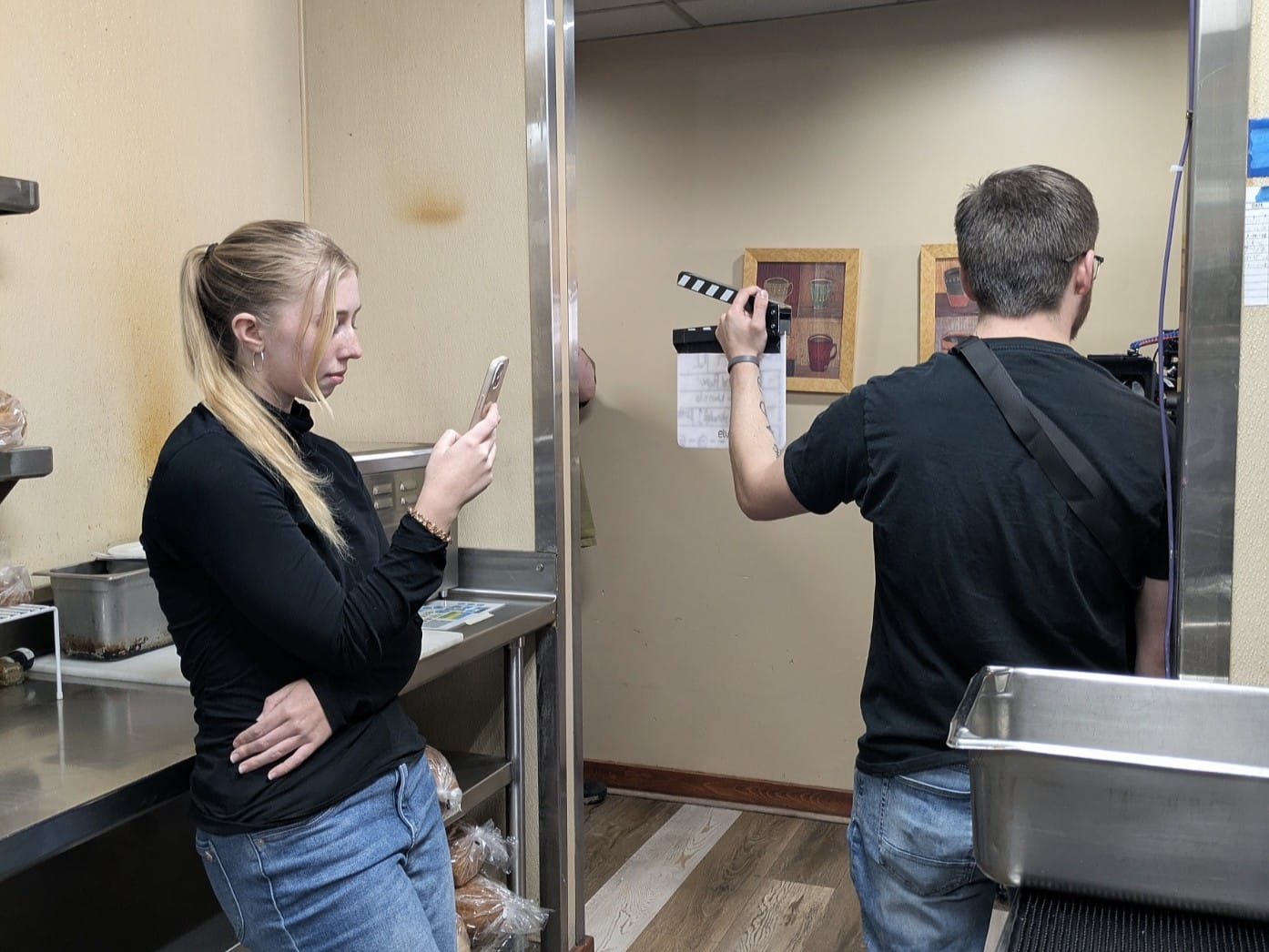
The emotional difficulty came later, in the sisters’ confrontation.
Nuncio had to balance camera positions, blocking and movement with the actors’ performances. Too many notes about where to stand or turn could interfere with what Henriques and Battie needed to carry internally.
Battie said the scene changed as rehearsals gave way to the set, costumes and camera.
“At the first rehearsal, you’re reading the lines, you’re just getting a grip on the character and the storyline,” Battie said. “When we filmed it, by then I felt like I really understood Lena.”
The actors still struggled through some takes. Lines were missed. Sections were skipped. The scene had to be filmed repeatedly from different distances, including close shots that left little room for either actor to hide.
When the rhythm returned, Battie said, so did the vulnerability.
Demi does not openly concede that her sister is right. Henriques played the scene as the moment when she understands anyway.
“She doesn’t admit it, but she definitely realizes it in that scene,” Henriques said.
Nuncio described it as the first crack in a barrier Demi has built through years of dismissing difficult conversations.
After Lena’s words get through, Demi can no longer pretend she has not seen what her anger is doing to the people around her. She later has to apologize to Adrian, another character she hurt.
“Now that she knows it, she can’t just look past what she’s been doing wrong,” Nuncio said.
The production also tracks that shift through color.
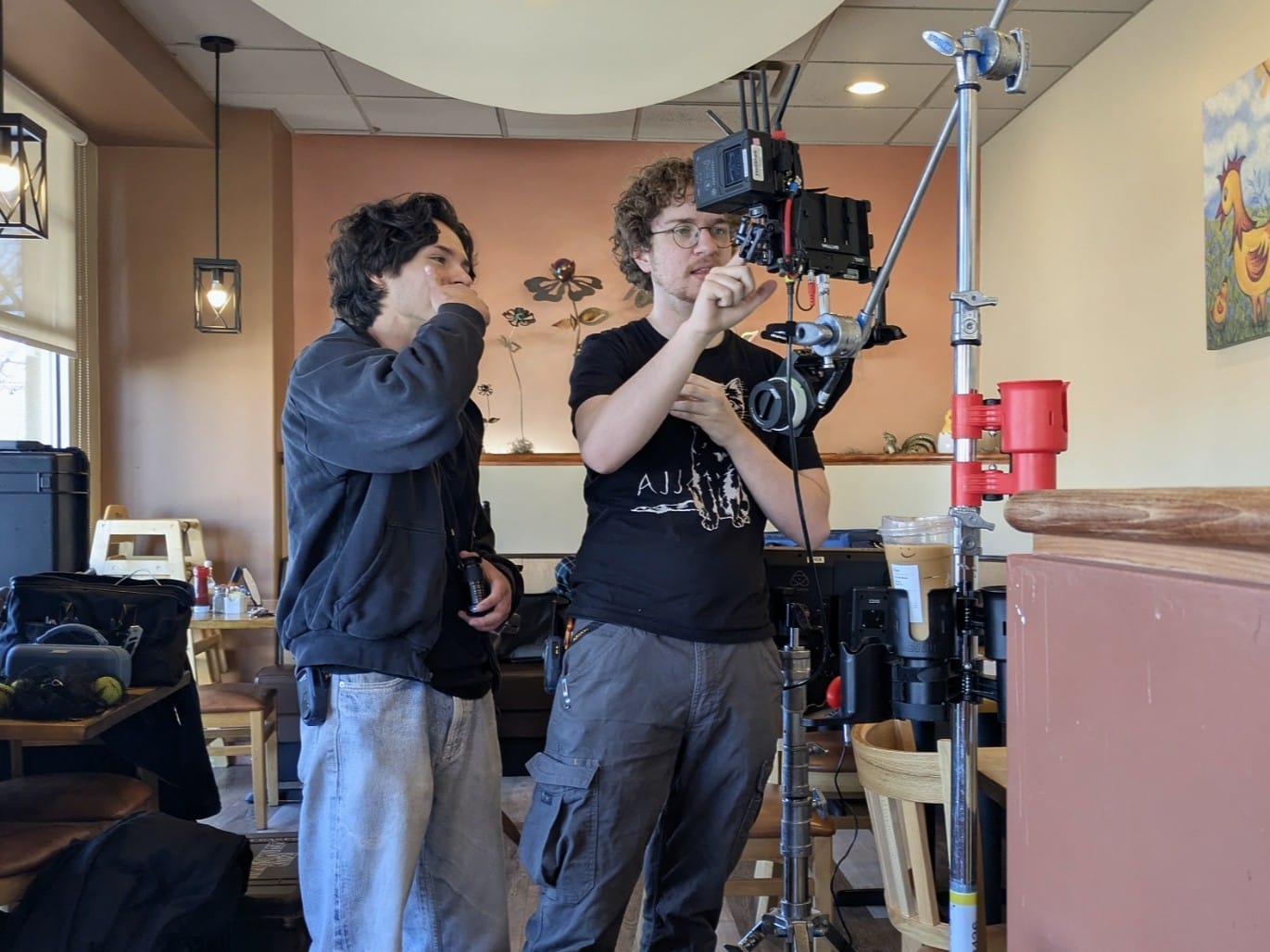
Although the class was called 16mm, the crew filmed digitally. Nuncio and the cinematography team tried to preserve the preparation and visual discipline associated with shooting on film.
The beginning was designed around colder blue tones. When Demi returns home and walks from the entrance into Lena’s study, the image begins transitioning toward warmer colors.
The change signals that the confrontation may lead somewhere different.
“We’re going from this cold and kind of emotionless anger into, OK, maybe there’s brighter things ahead,” Nuncio said.
The crew used three LUTs to build that progression. They also planned the lighting, camera settings and visual references before filming began.
“We did so much pre-production that it did kind of truly feel like we were shooting on film,” Nuncio said.
Blood & Paper is now moving through editing. Isalee Romero is assembling the rough cut, which she and Nuncio plan to refine scene by scene. Sound design, Foley work and an original score are expected to follow.
Nuncio said the team expects to finish the film by December and plans to submit it to festivals in Colorado and outside the state. She also hopes it will be selected for a future CCA Cinematic Arts Student Show.
The story still returns to paper.
In Lena’s hands, it takes another form. She folds paper cranes.
Battie saw the action as a small window into a character trying to control a life that keeps resisting her. Lena repeatedly turns a flat, fragile sheet into something ordered.
The crane is a symbol of peace, Battie said, but Lena folds it while struggling to hold on to Demi, their home and herself.
“She’s folding this symbol of peace while at the same time really striving for control,” Battie said.
What Lena wants is simpler than the paperwork, the fights or the proof Demi keeps chasing.
“Peace between her and Demi,” Battie said. “Peace in life, peace for Demi.”
Comments ()